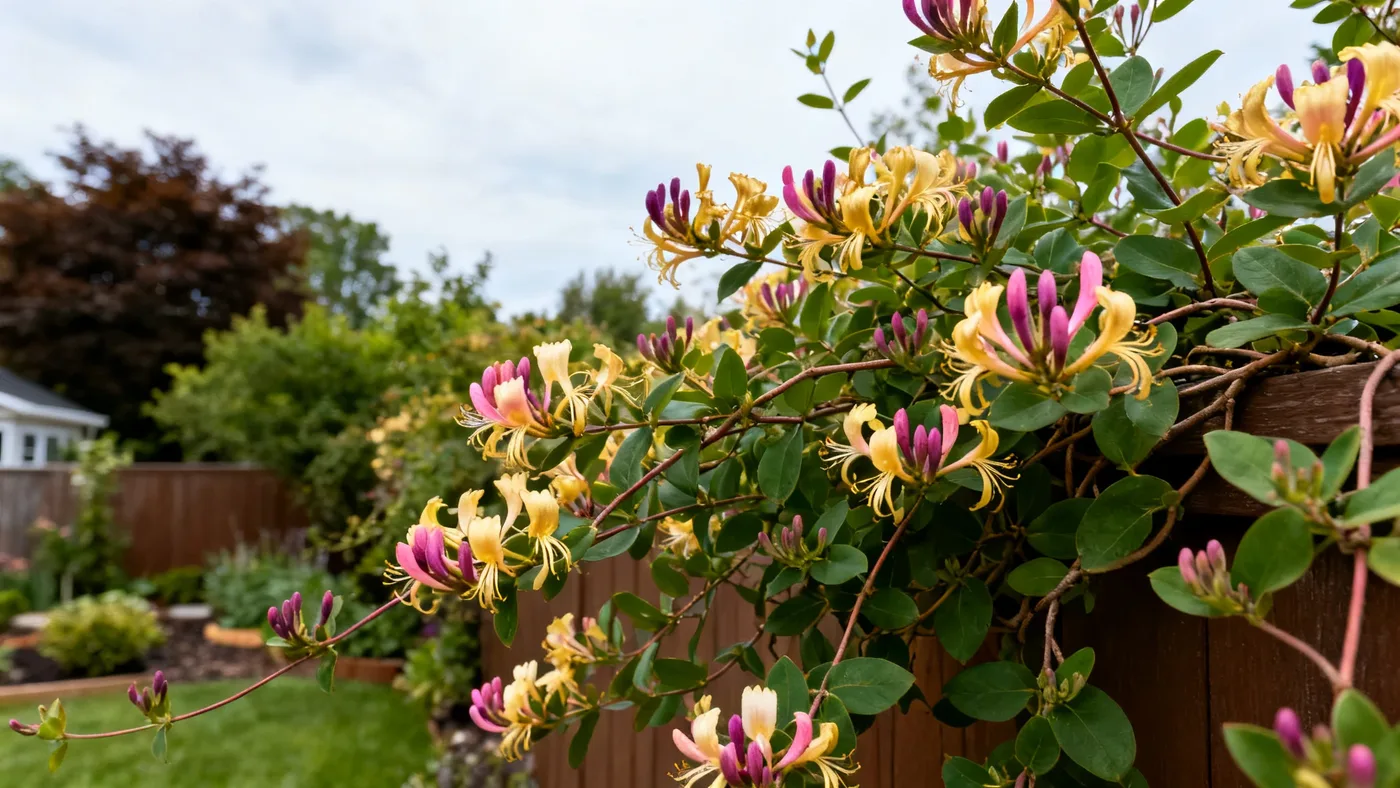
Why Isn't Your Scentsation Honeysuckle Blooming?
You planted a Scentsation Honeysuckle expecting fragrant cream and pink blooms by mid-spring, but instead you have only lush green foliage. Leaves are healthy. The vine is growing. Yet no flowers appear.
This is frustrating, but it's fixable. Most cases of poor or no bloom on Scentsation Honeysuckle trace back to one of six specific causes. Work through this guide systematically, and you'll likely pinpoint what's holding your vine back.
Before You Start: Understanding Your Vine's Bloom Timeline
Container-grown Scentsation Honeysuckle plants often bloom in the first season after planting, but growth intensity and flowering peak after 2 to 3 years. If your plant is in year one and you see even a few flowers, that's a good sign. However, if it is year two or later and bloom is absent or thin, one of the issues below is at work.
Materials You May Need
- Soil pH test kit (or extension service testing option)
- Balanced, slow-release fertilizer (13-13-13 or similar)
- Pruning shears or hand saw
- Horticultural oil or neem oil spray
- Measuring tape or ruler
- Mulch (2-3 inches)
- Watering can or hose with spray nozzle
Step 1: Verify Sunlight (The Most Common Culprit)
Scentsation Honeysuckle performs best in full sun and produces the strongest fragrance and most abundant flowers in full sun. It tolerates part shade, especially afternoon shade in hot climates, but flowering declines noticeably without adequate light.
What to check: Observe your vine for at least seven consecutive days. Note how many hours of direct, unobstructed sunlight it receives. Full sun means 6 to 8 hours minimum. If your vine sits in part shade (4 to 5 hours of direct sun), it will grow but bloom lightly.
What to do: If light is the problem, pruning nearby trees or repositioning the trellis away from buildings or dense vegetation can help. If the site is permanently shaded, consider relocating the plant to a sunnier spot during the dormant season (late fall through early spring) or accepting lighter bloom as a trade-off for the foliage in that spot.
Step 2: Check Watering Practices
Scentsation Honeysuckle requires consistent moisture, especially while establishing (the first season). Once established, it has moderate drought tolerance but still needs regular water to flower well. Both too little and too much water stress the vine and suppress blooms.
What to check: Feel the soil 3 to 4 inches deep near the base. After rain or watering, it should feel like a wrung-out sponge, not soggy or dust-dry. If it dries out completely between waterings, or stays waterlogged for days, that is your problem.
What to do: Water deeply and evenly when the top 1 to 2 inches of soil are dry. During the growing season (late spring through summer), this typically means watering once or twice weekly, depending on rainfall and heat. Reduce frequency in fall and winter. Apply 1 to 2 inches per week (including rain) as a baseline. Mulch around the base with 2 to 3 inches of organic mulch to retain moisture and regulate soil temperature.
Step 3: Assess Soil Condition and pH
Scentsation Honeysuckle adapts to many soil types but performs best in average, well-drained garden soil with a pH around 6.0 to 7.0 (slightly acidic to neutral). Poor drainage or extremely acidic or alkaline soil can weaken the plant and delay flowering.
What to check: Dig a small hole near the drip line of your vine and fill it with water. If water pools and sits for more than a few hours, drainage is poor. Also obtain a soil pH test kit from a local garden center or send a sample to your county extension service for a full analysis.
What to do: If drainage is poor, amend the soil with compost or coarse sand worked into the top 6 to 8 inches before planting (or around an existing vine, if feasible). If pH is far outside the 6.0 to 7.0 range, your extension service can recommend amendments. In most cases, waiting for 1 to 2 full seasons after soil amendment allows the plant to recover and resume normal flowering.
Step 4: Review Your Pruning Approach
This is a critical point: heavy pruning or severe cutbacks can eliminate flowering for a season or two. Scentsation Honeysuckle flowers on both old and new wood, but older stems are essential to reliable, abundant bloom. Avoid hard pruning.
What to check: Look at the structure of your vine. If you see many thin, new stems and very few thick, woody branches, your vine was cut back severely at some point. If the entire plant was sheared to a compact shape or cut to the ground, that explains missing blooms.
What to do: Going forward, use light pruning only. After the first flush of bloom in late spring or early summer, lightly prune to tidy the vine and remove dead or tangled stems. You can also shape the vine in late winter or early spring before new growth begins. Remove no more than one-third of the total growth in any one year. This approach keeps the plant productive and maintains old wood that carries flowers.
Step 5: Check for Pest Damage and Disease
Aphids, particularly the honeysuckle witches'-broom aphid, can distort new growth and reduce flowering. Heavy infestations weaken the vine. Powdery mildew thrives in humid conditions or poor air circulation and can spread across foliage, weakening the plant overall.
What to check: Inspect new shoots and leaf undersides for clusters of small insects (aphids appear as tiny, soft-bodied pests). Look for distorted, curled, or stunted growth (a symptom of witches'-broom caused by aphid feeding). Check leaves for a white, powdery coating, especially in humid weather or on crowded growth.
What to do: For light aphid populations, spray with water to dislodge them or use a horticultural oil spray in early morning or late evening. For heavier infestations or persistent powdery mildew, apply neem oil or an insecticidal soap according to product directions. Improve air circulation by pruning out crossing or crowded stems. In future seasons, avoid overhead watering late in the day, which promotes mildew.
Step 6: Assess Support and Vine Architecture
Scentsation Honeysuckle is a twining vine that grows 6 to 10 feet tall (trained on a support) and spreads 3 to 6 feet. It needs a sturdy trellis, arbor, or fence to climb. Without adequate support, the vine becomes a tangled, sprawling mass on the ground or draped over shrubs. This stress and poor light penetration within the tangled growth lead to sparse or absent flowering.
What to check: Is your vine on a trellis or other support? If so, is the support sturdy and does it allow upright growth? If the vine is sprawling on the ground, tangled around other plants, or sagging against a weak support, that is your blooming problem.
What to do: Install or upgrade to a sturdy support structure (a wooden trellis, metal arbor, or strong fence) that allows vertical growth. Gently guide the vine's stems upward and tie them loosely to the support with soft twine or fabric strips. Better air circulation and light penetration will follow, and flowering should improve within one season.
Common Mistakes to Avoid
- Over-fertilizing: Scentsation Honeysuckle is a light feeder. Excess nitrogen pushes leafy growth at the expense of flowers. A single application of balanced, slow-release fertilizer in early spring is sufficient. Do not fertilize again that season.
- Harsh pruning to control size: If your vine is too large, resist the urge to cut it to a compact shape. Instead, thin and reshape gently over two or three seasons, and consider moving the plant to a more spacious location.
- Ignoring the first-year window: A newly planted vine (year one) may produce minimal flowers while it establishes roots. Patience is warranted. By year two or three, bloom should accelerate if all other conditions are met.
- Assuming all yellowing leaves mean poor soil: Yellow foliage can also signal overwatering, severe aphid damage, or powdery mildew. Diagnose the cause before amending soil.
Expected Results and Timeline
Once you identify and correct the issue, expect changes over the next one to three growing seasons. A vine struggling with insufficient light may begin flowering within weeks of being moved to a sunnier spot. Improvements in watering or soil drainage typically show results by mid-season. Pruning adjustments compound over two to three years as the vine rebuilds productive old wood. Pest or disease recovery depends on the severity, but light infestations usually clear within one to two months of treatment.
Next Steps: Secure Long-Term Blooming
For detailed care guidance once your vine is blooming again, see our complete Scentsation Honeysuckle care guide. If you're starting fresh or planning to plant a second vine, our planting guide walks you through site selection and installation to avoid these bloom-blocking issues from the start.
Quick Reference: Bloom Troubleshooting Checklist
| Problem | Diagnosis | Quick Fix | Timeline |
|---|---|---|---|
| Little or no bloom | Less than 6 hours direct sun daily | Relocate to sunnier spot or prune nearby shade sources | Same season after relocation |
| Weak, sparse blooms | Inconsistent watering or dry soil between rains | Water deeply when top 1-2 inches of soil dry; mulch base | 3-4 weeks |
| No flowers after heavy pruning | Cut back more than one-third of vine at once | Use light pruning only going forward; allow 2-3 years recovery | 2-3 years |
| Distorted new growth, stunted stems | Aphid or witches'-broom infestation | Spray with water, horticultural oil, or neem oil | 1-2 months |
| White powdery coating on leaves | Powdery mildew (humid, poor air flow) | Improve air circulation; apply neem oil if severe | 4-6 weeks |
| Vine sprawling, tangled; few or no flowers | Inadequate or weak support structure | Install sturdy trellis or arbor; guide stems upward | 1 season |
| Plant in year one, minimal or no bloom | Normal establishment phase | Maintain consistent watering and sunlight; be patient | Year 2-3 for full bloom |
| Poor drainage, soggy soil after rain | Heavy clay or low-lying spot | Amend with compost; improve drainage if possible | 1-2 seasons after amendment |