Scentsation Honeysuckle
Lonicera periclymenum 'Scentsation'
Scentsation Honeysuckle Vine, Fragrant Summer Blooms
- Reaches 6-10 feet on a trellis or arbor with proper support
- Fragrant golden flowers from late spring through fall with reblooming
- Deer-resistant, cold-hardy to zone 5, thrives in full sun or part shade
About this plant
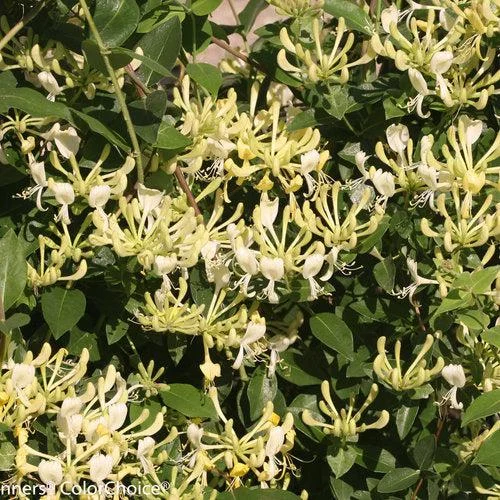
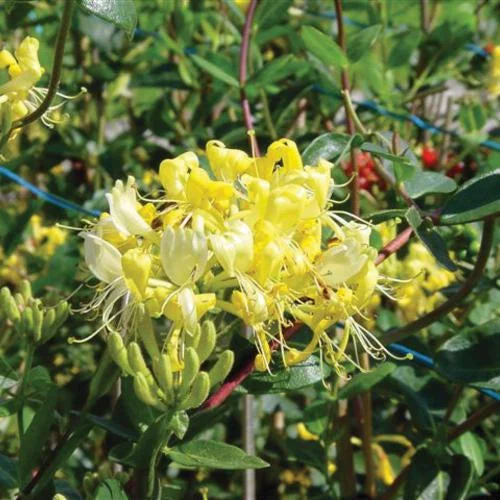
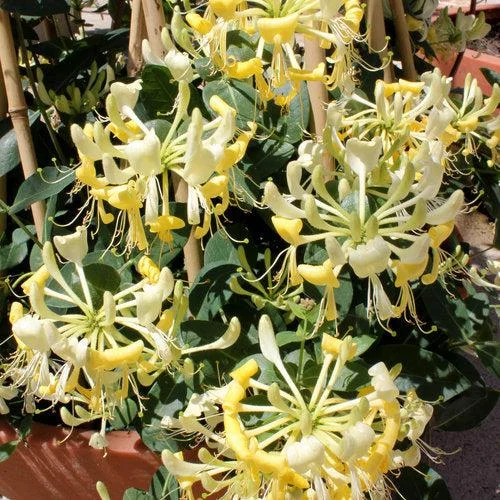
Scentsation Honeysuckle is a fast-growing deciduous to semi-evergreen vine that produces fragrant flowers from late spring through fall. The flowers are creamy yellow, flushed with pink and purple in bud, aging to gold. It twines readily over trellises, arbors, pergolas, and fences, reaching 6-10 feet tall with proper support. Deer-resistant and adaptable to full sun or part shade, it suits both garden beds and large containers.
Your plant arrives nursery-grown in its container, ready to plant. Water it thoroughly on arrival, then plant into well-drained soil at the same depth. Install a trellis or arbor within the first few days. During the first season, water consistently to help it establish. Once mature, it requires only average water.
Scentsation Honeysuckle at a glance
| Botanical name | Lonicera periclymenum 'Scentsation' |
|---|---|
| Plant type | deciduous to semi-evergreen (in mild climates) twining vine |
| USDA zones | 5-9 |
| Mature height | 6-10 ft as a climbing vine (trained on support) |
| Mature width | 3-6 ft spread, wider if left to sprawl without support |
| Sun | full sun to part shade; best flowering and fragrance in full sun, tolerates afternoon shade in hot climates |
| Water | average, consistent moisture; regular watering while establishing, then medium water needs |
| Bloom time | late spring through summer, with reblooming into fall in many climates |
| Bloom color | creamy yellow flushed with pink/purple in bud, aging to gold |
| Growth rate | fast, roughly 1-2 ft of new twining growth per year once established |
| Deer resistance | generally good/resistant, though not absolute in high-pressure areas |
| Best planting time | spring or fall |
Container sizes explained
| #1 / 1 Gallon | A trade one gallon pot (about 6.5 inches). One to two seasons older than a quart, with an established root system. |
|---|---|
| #2 / 2 Gallon | A trade two gallon pot. Common for peonies and perennials that need root room; usually blooms the first or second year. |
| #3 / 3 Gallon | A trade three gallon pot (about 10 inches). A well-developed shrub or small tree, often 2 to 4 feet tall on arrival. |
| Sprinter pot / 8 inch pot | Deep, narrow pots used for grafted maples and long-rooted stock. Height is a better guide than volume for these. |
Questions before you buy
Which size should I choose?
The 8" pot is the smallest starter option. The 2 gallon is mid-size with more established growth. The 3 gallon is the largest, offering faster flowering and impact. All three bloom the first season and reach full mature size within 2-3 years.
When should I plant after arrival?
Plant immediately upon arrival or within a few days if necessary. If you need to delay, water the container well and store it in an unheated location. Planting promptly allows the roots to establish quickly into their permanent location.
How large does this vine get?
Trained on a trellis or arbor, it reaches 6-10 feet tall and 3-6 feet wide. Without support, it sprawls further. The vine grows roughly 1-2 feet of new growth per year once established, reaching fuller mature size in 2-3 years.
How much sun does Scentsation Honeysuckle need?
Full sun produces the best flowering and strongest fragrance. It tolerates part shade, including afternoon shade in hot climates, though flowering may be lighter. For maximum flowers and scent, plant in a full-sun location.
What USDA hardiness zones can I grow this in?
Scentsation Honeysuckle grows in zones 5-9. In zone 5, foliage typically drops in winter; in milder zones 7-9, the plant often stays semi-evergreen. Verify your zone before purchasing to confirm this vine will survive your winters.
What care does it need during the first year?
Water consistently while the plant establishes, providing average, evenly moist soil. Set up a trellis or support immediately after planting. It tolerates most well-drained soils and typically blooms the first season. Once established, water needs drop to average.