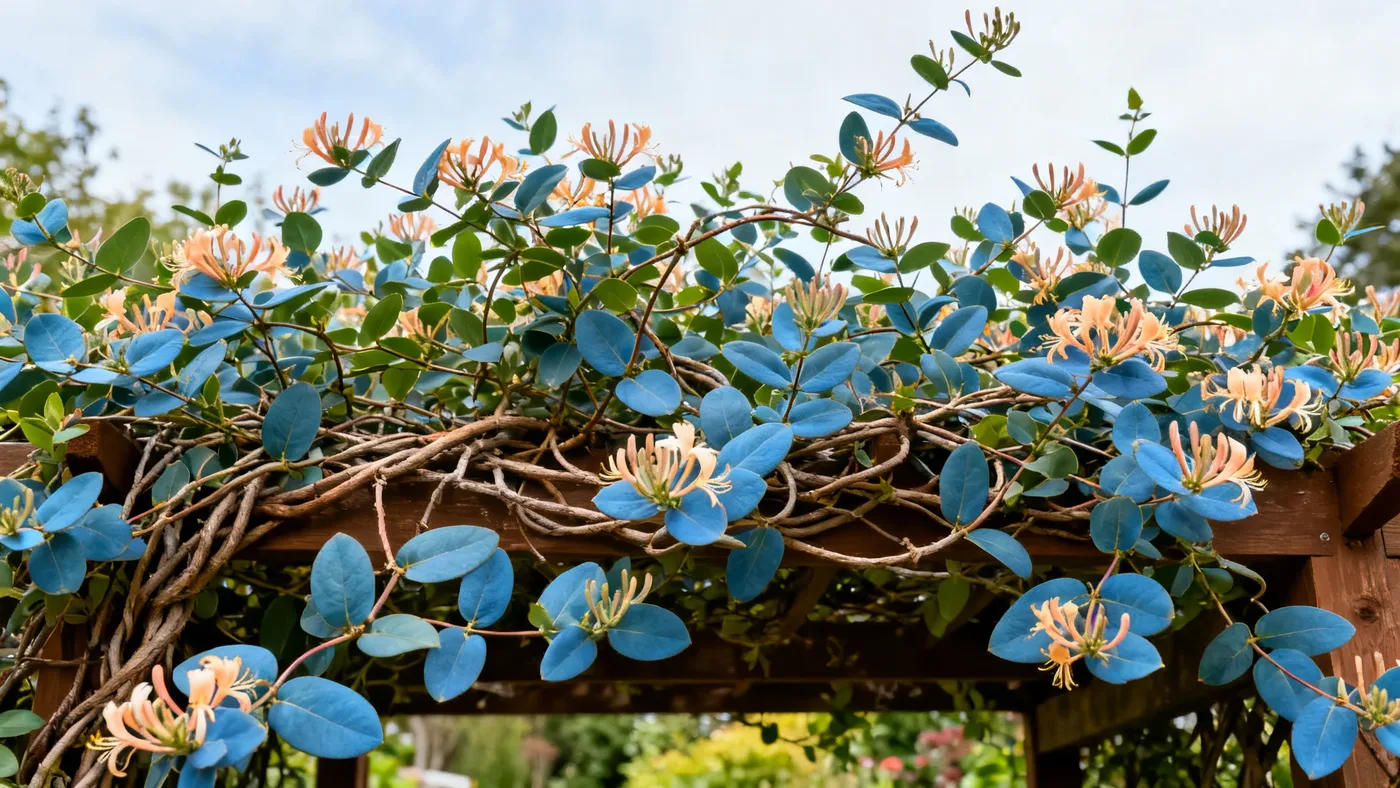
How Big Does Scentsation Honeysuckle Get and How Fast?
Scentsation Honeysuckle is a vigorous twining vine that brings fragrant color to gardens quickly. If you're planning where to plant yours, understanding its mature size and growth speed will help you choose the right support structure and give it the room it needs. Here are the questions we hear most often about how this vine grows.
Mature Size and Space
How tall does Scentsation Honeysuckle grow?
Scentsation Honeysuckle grows 6 to 10 feet tall when trained on a support structure like a trellis, arbor, or fence. The exact height depends on how long you let it climb and whether you prune it back each year. A mature vine on a tall arbor can reach the full 10-foot range, while one managed on a shorter fence may stay closer to 6 feet.
How wide does it spread?
The vine typically spreads 3 to 6 feet wide once established. If you leave it unpruned and let it sprawl without vertical support, it can spread even wider as it tumbles over itself. Keeping it on a defined trellis or fence will maintain the narrower width and a tidier appearance.
Can I grow Scentsation Honeysuckle in a small garden?
Yes, you can manage its size in a small space by choosing a support that limits vertical growth, like a short fence or compact arbor, and by pruning it back each year after flowering. You can also grow it in a large container with a trellis, which naturally constrains the root system and makes the plant more manageable. Even on a small mailbox planting or low pergola, it will produce abundant fragrant blooms within its designated space.
What is the difference between width and spread?
Width refers to the space the vine occupies side-to-side when grown upright on a narrow support, while spread describes how far it sprawls when given freedom to grow horizontally. On a wall or trellis, expect 3 to 6 feet of width; on an open arbor or when left unmaintained, the spread can be much larger as stems cascade and intertwine.
Growth Rate and Timeline
How fast does Scentsation Honeysuckle grow?
Once established, Scentsation Honeysuckle is a fast grower, putting on roughly 1 to 2 feet of new twining growth per year. Growth rates vary by region and climate, so a vine in a warm zone with plenty of sun may grow closer to 2 feet annually, while one in cooler climates may average 1 foot per year. The first year after planting is usually slower as the root system develops; vigorous growth typically kicks in by year two.
How long does it take to reach full size?
Scentsation Honeysuckle reaches its fuller mature size in 2 to 3 years with regular watering and good care. This timeline assumes you're starting with a container-grown plant from a nursery and providing consistent moisture during the establishment phase. Individual plants may mature slightly faster or slower depending on your climate, sunlight, and soil conditions.
Will my Scentsation Honeysuckle bloom the first year?
Yes, container-grown plants often bloom during their first growing season, sometimes just weeks after planting if they arrive already budded. Full fragrant production typically comes in year two and beyond as the vine matures and puts more energy into flowering rather than establishing roots. Early blooms are a bonus; the real show arrives once the vine is established.
How much does it grow in the first year?
In the first year, expect modest growth as the root system develops; most of the plant's energy goes underground. You may see 6 inches to 1 foot of aboveground growth in year one, especially if you water regularly during the growing season. By year two and beyond, when roots are established, the annual growth accelerates to the full 1 to 2 feet per year.
Can I speed up growth with fertilizer?
Scentsation Honeysuckle is a light feeder and does not require heavy fertilizing to thrive. A balanced, slow-release fertilizer applied in early spring is generally sufficient. Over-fertilizing can actually produce excess leafy growth at the expense of blooms, so restrain yourself and let consistent watering do most of the work.
Support and Structure
What kind of support does Scentsation Honeysuckle need?
This vine twines naturally around its support, so it thrives on trellises, arbors, fences, pergolas, and sturdy poles. The support should be strong enough to hold the weight of a mature vine covered in foliage, especially in windy areas. Without support, the vine becomes a sprawling tangled mass rather than an attractive climbing plant.
How far apart should I space multiple plants?
If planting more than one Scentsation Honeysuckle, space them 3 to 6 feet apart. This spacing prevents them from competing for space as they mature and spread to their full 3- to 6-foot width. Tighter spacing (3 feet) works for a denser, fuller planting; wider spacing (6 feet) lets each vine show off its individual form.
Can I train Scentsation Honeysuckle as a ground cover instead of a climber?
While it naturally wants to climb, you can allow it to sprawl across the ground if you provide a sunny area with room for it to spread. Without a vertical structure, it will creep and tumble across the landscape, eventually spreading 6 feet or more. Keep in mind that ground-cover use makes pruning and deadheading more difficult, and the fragrant flowers are displayed lower where they may be less noticeable.
Is Scentsation Honeysuckle strong enough for a heavy arbor?
Yes, it's vigorous enough to cover a large arbor, and mature vines become woody and substantial. Make sure the arbor is structurally sound and can support the weight of a full vine plus wind loads. The vine itself won't pull down a well-built structure, but a flimsy arbor may sag or fail under the accumulated weight and foliage density.
Container Growing
Can I grow Scentsation Honeysuckle in a container?
Yes, Scentsation Honeysuckle is suitable for container growing, especially in large containers with a trellis or other climbing support. Nursery-grown plants are commonly sold in #1 and #3 containers, and stepping up to a larger pot (10 gallons or more) will support vigorous growth. Container-growing naturally constrains the overall size, making it ideal for patios, small yards, and entryway plantings.
How large should the container be?
Start with at least a 10-gallon pot for a single vine, though a #3 container (about 7 gallons) from the nursery is often a good initial size. As the vine grows, you may want to move it to a larger pot (15 to 20 gallons) to give roots more room and support vigorous growth. A large container also retains moisture better during the hot growing season, reducing watering frequency.
How does container size affect growth rate?
A larger container allows for faster, more vigorous growth because the root system has more room to expand and access more soil moisture and nutrients. A constrained pot will slow growth and limit the ultimate size of the vine, which can be desirable if you want a compact display. Either way, consistent watering is more critical in containers than in the ground.
Can a potted Scentsation Honeysuckle grow as large as one planted in the ground?
No, container vines will generally stay smaller than in-ground plantings because the root system is confined. A potted vine might reach 5 to 7 feet tall rather than the full 6 to 10 feet possible in the ground, and the width will be correspondingly reduced. For maximum size and vigor, in-ground planting in well-drained soil is the best choice.
Regional and Climate Variations
Does Scentsation Honeysuckle grow faster in warm climates?
Yes, warmer zones tend to produce faster growth and longer blooming seasons. In zones 8 and 9, you may see the full 2 feet of growth annually and flowering that extends well into fall. In cooler zones 5 and 6, growth is somewhat slower and the blooming window shorter, but the vine is still vigorous and productive.
Is it hardy in all zones?
Scentsation Honeysuckle is hardy in USDA zones 5 through 9. It is deciduous to semi-evergreen (holding some foliage in mild winters), so in zone 5 it will drop all its leaves and go dormant, while in zone 9 it may retain some foliage year-round. Check your local zone to ensure this cultivar will overwinter in your area.
How does winter affect growth and size?
In colder zones, winter dormancy stops active growth, and the vine appears bare on its support. Spring brings new growth from the woody framework, and by summer the vine is fully leafed out and blooming. In milder zones, growth slows but may continue through winter, and the vine retains much of its foliage, creating year-round structure in the garden.
Pruning and Long-Term Management
Does pruning affect how large Scentsation Honeysuckle gets?
Moderate pruning after the first bloom flush will keep the vine tidy and encourage reblooming without significantly limiting overall size. Heavy hard-pruning into old wood can set back growth, and since older wood contributes to flowering, aggressive pruning may reduce blooms. Light shaping in late winter or early spring before new growth, and a tidy-up after the first flush, maintains size and form without harm.
How long does Scentsation Honeysuckle live?
This is a long-lived woody vine, often thriving for 15 to 20 years or more with routine pruning and support maintenance. As it ages, the vine becomes more substantial and woody, and older established vines often flower more prolifically than younger plants. Regular pruning and adequate support will keep it healthy and vigorous throughout its lifespan.
Will Scentsation Honeysuckle outgrow its space?
Yes, if left entirely unpruned, it will eventually fill whatever space is available and may become a tangled mass. An annual light prune after blooming and a spring shaping will keep it within bounds and maintain its ornamental form. The more proactive you are with pruning, the more control you have over final size.
Can I cut it back hard if it gets too large?
Heavy hard-pruning into old wood should be avoided if possible, since older wood contributes to flowering and removing it reduces blooms for a season or two. If the vine has truly gotten out of hand, you can cut it back to the main framework in late winter, but be prepared for slower growth and fewer flowers the following season. Light annual pruning is a better long-term approach.
Quick Reference
| Characteristic | Details |
|---|---|
| Mature Height | 6 to 10 feet (when trained on support) |
| Mature Width/Spread | 3 to 6 feet (upright on support); wider if sprawling |
| Annual Growth Rate | 1 to 2 feet per year once established (varies by region) |
| Time to Full Size | 2 to 3 years from nursery container |
| First Bloom | Often year one from container-grown plant |
| Spacing (Multiple Plants) | 3 to 6 feet apart |
| Hardy Zones | 5 to 9 (deciduous to semi-evergreen) |
| Lifespan | 15 to 20+ years with routine care |
| Container Suitable | Yes (large container with trellis; commonly sold in #1 or #3 pots) |
| Container Growth | Generally stays smaller than in-ground plantings |
Understanding these growth characteristics helps you select the right location and support structure for your Scentsation Honeysuckle. Whether you're planning a towering arbor display or a compact container arrangement, this vigorous vine will reward you with fast, fragrant growth. For more detailed planting and care information, see our Scentsation Honeysuckle care guide.