Scentsation Honeysuckle Buying Guide: Container Sizes to Know
When you decide to buy Scentsation Honeysuckle for your garden, the first choice you'll face isn't color or cultivar, it's container size. Nursery-grown Scentsation Honeysuckle (Lonicera periclymenum 'Scentsation') is commonly sold in quart, #1 (1-gallon), or #3 (3-gallon) containers. Each size represents a different stage of the plant's development, different price-to-value points, and different expectations for how quickly your vine will fill a trellis or arbor. This guide walks you through what to compare, what to look for in a healthy plant, and where to find Scentsation Honeysuckle for sale.
Understanding Container Sizes for Scentsation Honeysuckle
Scentsation Honeysuckle is a fast-growing vine, averaging 1 to 2 feet of new twining growth each year once established. That growth rate means the container size you choose has real consequences for how long it takes to achieve a mature, flowering display.
Quart containers hold 32 ounces of soil and are the most economical entry point. A quart-size Scentsation Honeysuckle is usually a young vine, often with just a few months of growth. These plants are ideal if you're budget-conscious, don't mind waiting, or are planting multiples across a large area.
#1 (1-gallon) containers are the middle ground. A #1 Scentsation Honeysuckle has usually established a stronger root system and more developed foliage than a quart plant. This size offers faster establishment in your garden and a more immediate visual impact than quart-size stock.
#3 (3-gallon) containers represent a more mature plant, often 12 to 18 months old by the time it reaches your garden. Container-grown Scentsation Honeysuckle plants often bloom the first season from a quart or #1, but a #3 plant is more likely to have already flowered in the nursery pot. This size gives you near-instant flowering potential and a vine ready to climb a support with more vigor than smaller sizes.
What to Look For When Buying Scentsation Honeysuckle
Regardless of container size, a quality Scentsation Honeysuckle plant should show these signs of health and vigor:
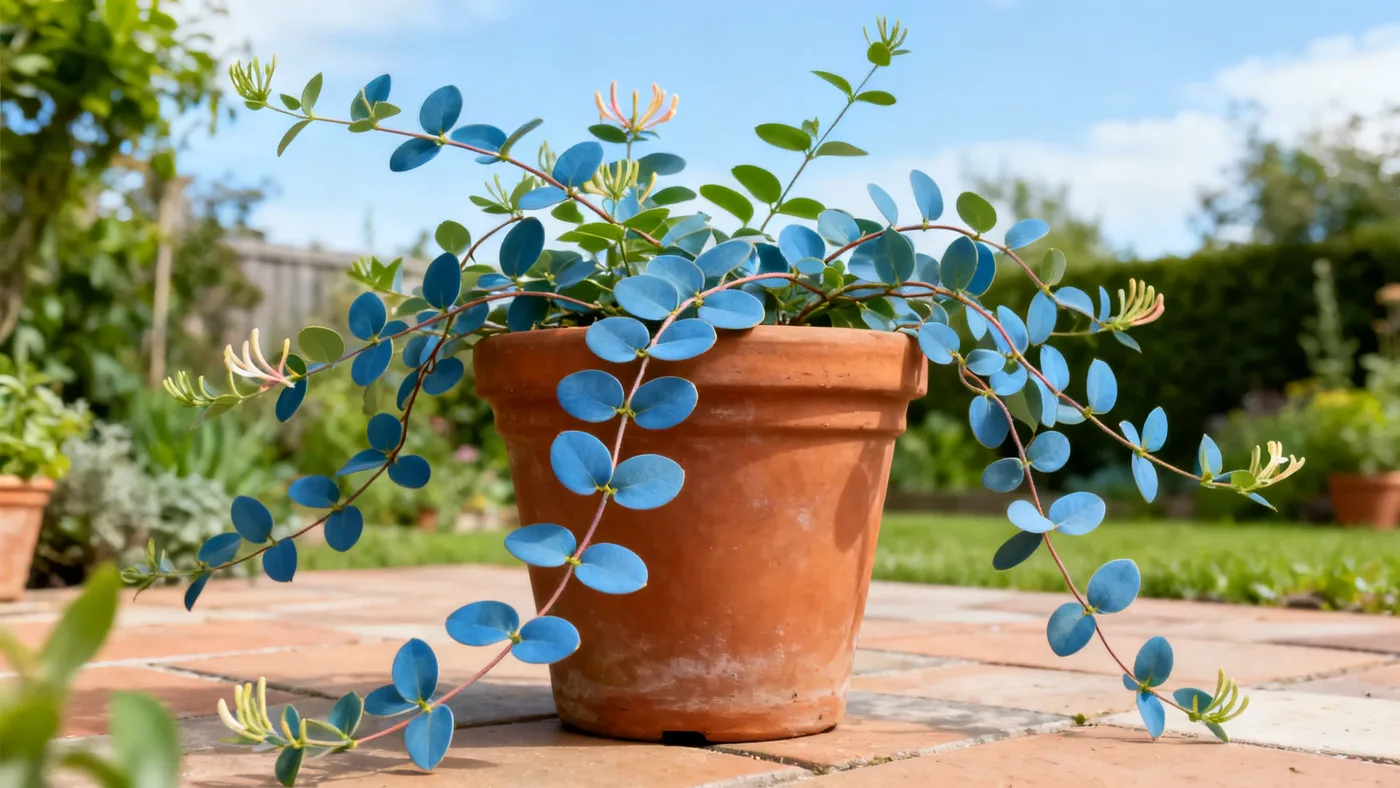
Foliage color and density. Leaves should be uniformly blue-green (the variety's signature color) and present along the entire length of the stems, not sparse or concentrated only at the tips. Yellow or discolored foliage suggests stress, disease, or poor nursery care. The oval leaves should feel firm when gently pressed, never limp or papery.
Stem condition. Twining stems should be flexible and greenish (not brown or woody), even on a #3 plant. If you gently bend a stem, it should flex without snapping. A brittle, dry stem indicates dehydration or age-related decline.
Root presence without rootbound conditions. Carefully lift the plant from its pot (if the nursery allows a brief inspection) and check the drainage holes. You should see roots, but not a dense mat circling the entire root ball. Roots circling obsessively or breaking through the bottom of the pot indicate the plant is ready for upsizing and should have been moved to a larger container weeks ago.
No signs of pests. Look at both sides of the leaves. Honeysuckle can host aphids (including the honeysuckle witches'-broom aphid), scale insects, or spider mites. Tiny distorted new growth or sticky residue on leaves are red flags. Pass on plants showing these signs.
Evidence of growth. On a #1 or #3 plant, you should see fresh growth at the branch tips, lighter-colored, newly unfurled leaves. Stagnation suggests the plant sat too long in the nursery or wasn't watered consistently.
Container Sizes and Timeline to Maturity
Scentsation Honeysuckle reaches fuller mature size in 2 to 3 years. Your container choice influences this timeline.
| Container Size | Typical Plant Age | Time to Cover a Support (typical) | First-Season Bloom Likelihood |
|---|---|---|---|
| Quart | 2–4 months | 2–3 years | Possible, but modest |
| #1 (1-gallon) | 6–12 months | 1.5–2.5 years | Likely with good care |
| #3 (3-gallon) | 12–18 months | 1–2 years | Very likely, often heavy |
If your goal is fragrance and color within the first season, a #3 container is the surest bet. For a budget-friendly option where you're willing to wait a year or two for full coverage, quart or #1 sizes make sense.
Comparing Quality Across Vendors
Not all Scentsation Honeysuckle plants are created equal, even within the same container size. A reputable nursery will have invested in consistent watering, correct light, and proper hardening-off (gradual acclimation to outdoor conditions before sale). A plant that's been sitting in dry soil or crowded shade will appear pale and weak, even in a large pot.
When shopping, compare the health indicators above across vendors. The cheapest price is rarely the best value if the plant itself is stressed or rootbound. A slightly higher price for a robust, well-cared-for vine pays dividends in faster establishment and flowering in your garden.
Ask the nursery staff about how often the plants are watered and whether they're receiving appropriate light (Scentsation Honeysuckle blooms best in full sun but tolerates afternoon shade). If the staff can answer these questions confidently, they're likely caring for their inventory well.
Red Flags to Avoid
Yellowing leaves with soft stems. This suggests overwatering or root rot. A plant in this condition will struggle to establish in your garden.
Dried-out, wilted foliage. If the plant hasn't recovered after the nursery provides water, the root damage may be irreversible. Pass on it.
Severely rootbound plants. A plant circled with roots and struggling to drain isn't a "deal", it's a plant that's been neglected. It will take weeks in your garden just to recover enough to grow normally.
No new growth visible. Stagnation is a sign the plant isn't thriving in its current conditions. Why bring a problem home?
Pests or disease symptoms. Powdery mildew (white coating on leaves), leaf spots, or obvious insect damage should disqualify a plant. The plant you bring home may spread these issues to your garden.
Cracked or damaged containers. A broken pot means the roots have been exposed or the soil has dried unevenly. Structural damage to the pot also makes transport home risky.
Where to Buy Scentsation Honeysuckle for Sale
Scentsation Honeysuckle is bred and marketed by Proven Winners, a major cultivar development and licensing company. This means the plant is widely available through:
Local and regional nurseries. Many independently owned garden centers carry Proven Winners selections in quart and #1 sizes. Call ahead to ask if they have Scentsation Honeysuckle in stock or can special-order it. Local nurseries are often your best source for personal advice on plant quality and care.
Large garden centers and home improvement chains. Major retailers typically stock popular vines in quart and #1 containers during spring and early fall planting seasons. Quality varies; use the checklist above to evaluate what they have on hand.
Online nurseries and mail-order suppliers. Specialty online retailers ship container-grown Scentsation Honeysuckle nationwide. Shipping adds cost and stress to the plant, but many online sources pack carefully and provide guarantee protections. Check reviews and shipping policies before ordering.
Plant swaps and local propagators. In some regions, gardeners and small-scale propagators share cuttings or rooted liners at garden clubs or online community groups. If you're patient and have connections, this can be a low-cost option, just ensure the source is propagating the 'Scentsation' cultivar, not a look-alike honeysuckle variety.
Whichever source you choose, buy during the plant's active growing season (spring through early fall) rather than late fall or winter. A plant purchased and planted in spring or early fall has the entire growing season to establish roots before winter stress.
Making Your Purchase Decision
Your choice of container size and vendor should reflect your timeline and budget. If you're redesigning a garden space and need quick impact, invest in #3 containers from a reputable source. If you're planting a hedge of honeysuckle along a fence or creating a mixed trellis display, quart or #1 sizes let you stretch your budget and still achieve a mature, flowering display within 2 to 3 years.
In any case, buy the healthiest plant you can find at your price point. A vigorous Scentsation Honeysuckle will reward you with creamy-yellow flowers flushed pink in bud, aging to gold, plus deeply fragrant evening blooms from late spring through fall. Once established, the vine is a long-lived woody plant, often thriving for 15 to 20 years or more with routine pruning and trellis maintenance.
Ready to plant your new honeysuckle? Check our full Scentsation Honeysuckle care guide for watering, sun, spacing, and seasonal pruning steps to ensure your vine thrives.
Quick Reference: Buying Checklist
| Before You Buy | Quality Indicators |
|---|---|
| Compare all three container sizes available | Foliage is uniformly blue-green and dense |
| Inspect the plant in person if possible | Stems are flexible, not brittle or dry |
| Ask the nursery about watering and light conditions | Roots present but not circling obsessively |
| Buy during spring or fall planting season | No visible pests, damage, or disease symptoms |
| Avoid severely rootbound or wilted plants | Fresh, light-colored growth visible at branch tips |
| Choose a vendor with good inventory turnover | Soil moist but not waterlogged |