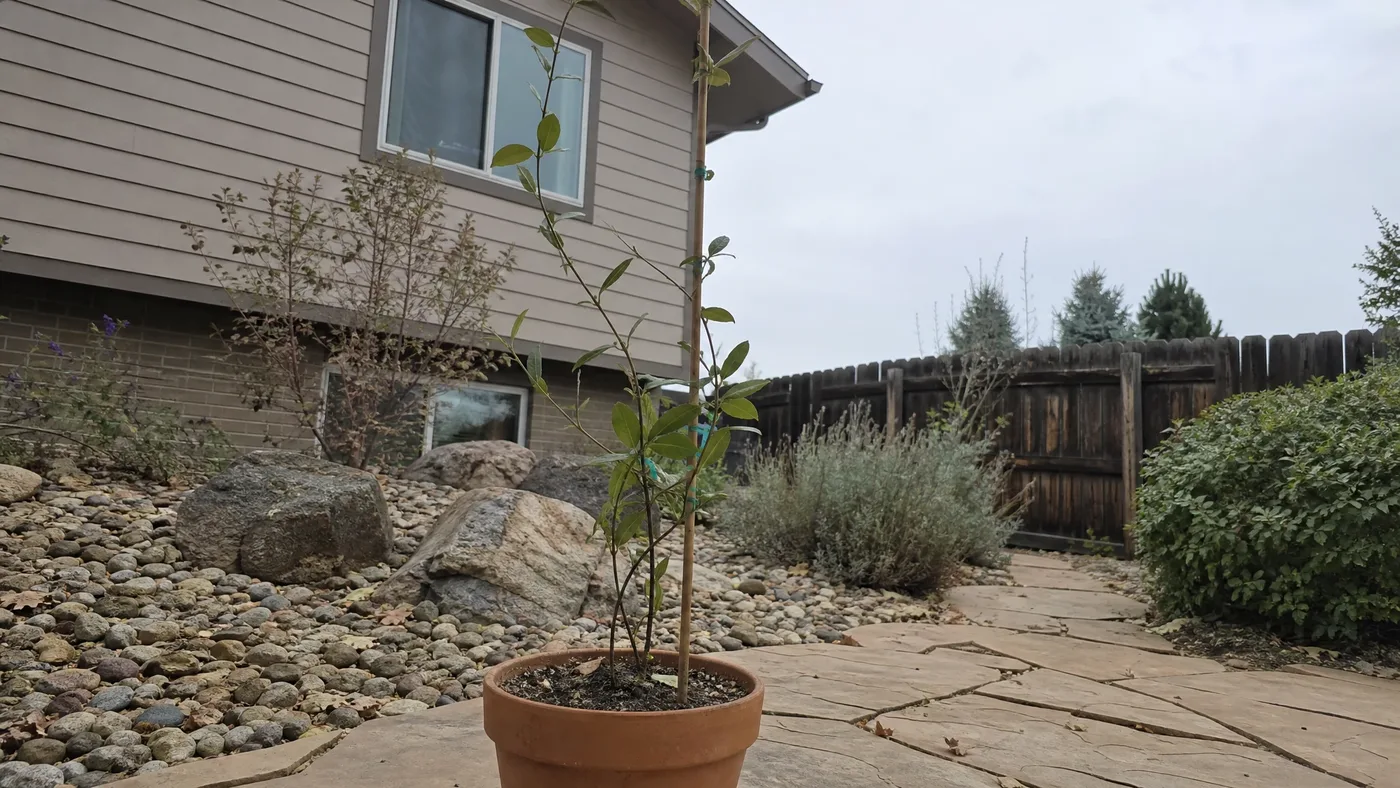
Can You Grow Scentsation Honeysuckle From Seed?
Picture a seedling coming up in a sunny bed: a green patch of paired oval leaves that looks just like its parent in leaf, though it may look nothing like it in bloom. Many people assume that a vine with a name on its tag will pass that name on through its seed.
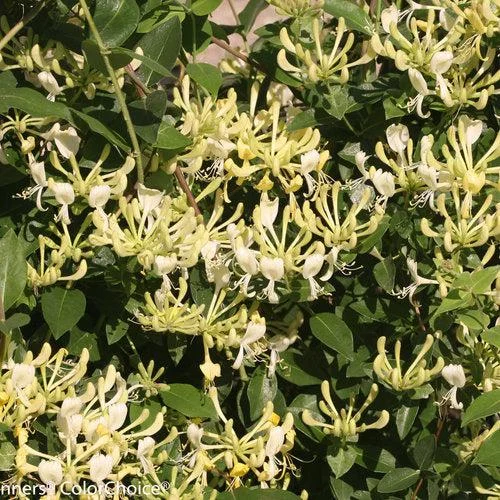
What we see is that seed-grown honeysuckle is a different plant wearing familiar leaves. For Scentsation, whose creamy-white to yellow flowers and heavy perfume are the whole reason to grow it, neither trait is promised by a seed.
This guide covers everything you need to know about growing Scentsation from seed, from how the vine twines and roots itself to what its patent allows, how seedlings drift in color and scent, and how cuttings are taken and set in light so they root well.
How the Vine Climbs and Roots Itself
Scentsation is a woodbine, Lonicera periclymenum, a European native whose soft stems climb by twining. Each shoot sweeps in slow circles until it finds a wire, branch or neighboring stem, then wraps and hauls itself upward. The result is a vine that threads through a trellis in loose, rippling lines, with paired oval leaves set in neat opposite rows along the way.
The habit of the cultivar is tall and slim. It is a vigorous deciduous climber that reaches roughly 13–26 feet but spreads only about 1.6–3.3 feet across, while the species is listed at 10 to 20 feet tall and 3 to 6 feet wide. That narrow, upright shape is part of what you are choosing when you pick this plant over its looser relatives.
Nodes Are Where Roots Begin
Look closely at the joints where each pair of leaves meets the stem. These nodes are where the plant keeps growth in reserve, and a node that stays in contact with moist soil will send out roots. This is how a trailing stem pins itself down and starts a second plant, a process gardeners call layering.
You can see it happen in a garden where a long shoot has drooped to the ground over a season. Lift it and you often find the buried joint has anchored itself, with the stem on either side still alive and growing. Nothing about that new plant is different from the old one, because it never left the parent's tissue.
What Rooting Means for Seed
A cutting simply asks a severed stem to do the same thing in a pot. Because the new roots grow from the parent's own tissue, what you end up with is the parent, carried on in a new place. Seed works differently, and that difference shapes everything else in this guide.
Why Scentsation Honeysuckle Is a Clone, Not a Seed Line
A cultivar is one particular plant that someone noticed, liked and chose to keep. Scentsation is a selection of woodbine with creamy-white to yellow flowers and an exceptionally strong perfume, and every vine sold under the name is a piece of that original, multiplied by cuttings. A seed line is something else: a population bred over generations until its seedlings come true, and that is not how Scentsation is made.
The reason is plain genetics. Seed forms when pollen from one plant fertilizes another, and the genetic material of two parents is combined by pollination and fertilization to create offspring that are different from each parent. The pollen can come from any honeysuckle in flower nearby, so even when you know the mother plant, you rarely know the father.
Think of the garden on a warm evening, with the vine heavy in bloom and visitors moving from flower to flower. Every one of those visits is a small act of mixing, and any pollen it carries from a neighbor's woodbine rewrites the offspring before a berry has even formed. The vine you love is one fixed arrangement of genes, and seed reshuffles it.
One of the most common questions we get is whether the berries on a mature vine can be sown to get more of the same. Nothing stops you from sowing them, but what comes up is a new woodbine with its own mix of traits, not a copy of the vine you admired. The berries themselves are ornamental and not for eating.
What Patent PP16240 Means for Propagating Scentsation Honeysuckle
Scentsation is protected by plant patent PP16240. A plant patent covers a plant's asexual propagation, and Iowa State Extension notes that it lasts 20 years from the filing date and cannot be renewed. We are growers, not lawyers, so if you need to know whether the term on PP16240 has run out, check the patent record rather than guess.
The same Iowa State page spells out the practical side for gardeners. You cannot legally propagate a patented plant by division, cuttings or other vegetative methods without permission from the patent holder, and that includes plants you would only give away or swap. It cuts against the friendly habit of passing a rooted piece over the fence, but it is how the people who bred the plant are paid for their work.
Seed sits in an odd spot. Since the patent covers vegetative propagation, seed falls outside it, yet seed does not hand you the cultivar. One road is closed by law unless you have permission, the other by genetics.
What we tell customers is to buy a licensed plant and to treat cuttings as work for growers with permission, or for a vine whose patent term has ended. The sections below describe how cuttings are done so you understand how the plants in the trade are made, and so you can do it properly if the permission is yours.
Seedlings of Scentsation Honeysuckle Drift in Color and Scent
Imagine a dozen seedlings from the same vine, all wearing the same oval leaf. Foliage gives away very little, and the differences show up when the flowers open. Across the species and its cultivars, woodbine flowers run through cream and tan, gold and yellow, pink, purple and white, and a seedling can reach back into any of that inheritance instead of holding to Scentsation's creamy white and yellow.
Scent Is the Fragile Trait
UC Master Gardeners describe Scentsation as highly scented as its name suggests, and that is the quality a seedling is least likely to repeat. You may get a faint perfume, a different one, or an evening fragrance that never reaches the patio, and you will not know until the first flowers open. Our guide to why Scentsation smells so good shows how much is riding on that trait.
The wait makes this a poor bet. A woodbine grown from seed needs time to reach flowering size, so you spend growing seasons tending a vine that may turn out plain. By then it may already be tied to your trellis, and pulling out a healthy plant you raised yourself is harder than it sounds.
Timing and Habit Can Wander Too
The species blooms in spring and sporadically through summer, while the cultivar flowers from summer to autumn, so a seedling may follow either pattern. If you want to see the real cultivar's pattern, our bloom time and flower color guide lays it out. This table compares what the two routes tend to deliver.
| Trait | Cutting from Scentsation | Seedling |
|---|---|---|
| Flower color | Creamy white to yellow | Anywhere in the species' range |
| Fragrance | Exceptionally fragrant | Unpredictable, possibly faint |
| Bloom season | Summer to autumn | May follow the species instead |
| Habit | Tall and narrow | May run looser or wider |
Taking Scentsation Honeysuckle Cuttings That Keep the Scent
A cutting is the one route that carries the parent's flowers and fragrance, because it is the parent, just in a smaller piece. The skill is in choosing a shoot that wants to root. Take your cutting during the growing season from a healthy, non-flowering shoot that is firm toward the base and still soft at the tip.
Choosing the Shoot
Pick a stem from a vine that has the scent and color you love, and take it in the cool of the morning when the tissue is full of water. A shoot that has already flowered has spent energy it now needs for roots. Make sure you have the right to propagate it, as covered above.
Look for a stem with an even, steady thickness and clean paired leaves, free of the white dusting of powdery mildew or the spots of leaf spot. A cutting from a stressed shoot carries that stress into its pot, and it will root more slowly.
Steps for Preparing the Cutting
The sequence below is the one we follow for woodbine cuttings.
- Cut just below a node with a clean, sharp blade, since that is where roots form most readily.
- Strip the leaves from the lower nodes and keep only the top pair, trimming any large leaf so it loses less water.
- Dip the base in rooting hormone if you have it, then tap off the excess.
- Set the cutting in a gritty, moist mix so at least one bare node sits below the surface.
- Cover the pot loosely to hold humidity, lifting the cover often so air can move.
Label each pot with the date and the parent vine as you go. Cuttings from several plants look identical for weeks, and the label is the only record of which one carries the scent you wanted.
Setting Cuttings in Light That Builds Roots
A leafy cutting has no roots to replace the water it loses, so light has to be bright but gentle. Think of the glow just inside a window that never catches the hard midday sun. Strong light through glass can scorch the tender pair of leaves before roots appear.
Bright Light, Not Hot Sun
Give the pot a bright, indirect spot and keep the mix evenly moist but never soggy. Soggy mix invites fungal trouble, and honeysuckle is prone to powdery mildew and leaf spot, so good air movement matters. In our rows, a cutting scorched in its first week rarely catches up with one that was kept in bright shade.
Watch the leaves for your signal. Leaves that droop and pale mean the light is too strong or the air too dry, while a stem that stretches long and thin between nodes is reaching for more light than it is getting.
Knowing When It Has Rooted
Fresh growth at the tip is the clearest sign, and a gentle tug that meets resistance confirms it. Roots showing at the drainage holes mean it is ready for a bigger pot. Pot it up into a mix that stays moist but drains freely, which suits this plant at every stage.
Moving the Young Vine Outdoors
Harden the young vine off gradually, giving it a little more outdoor light and air each day before it faces full conditions. Then follow our guide on planting Scentsation honeysuckle, where it will want full sun or partial shade and moist, well-drained soil. Give it something to twine on from the start, and it will begin its slow circling almost at once.
Seed Is for Curiosity, Cuttings for Scentsation Honeysuckle
Sow seed if you enjoy surprises and have room to wait and see. You will get a woodbine, and it may be a lovely one, but it will not be Scentsation. Treat it as an experiment in the back corner, not as a way to get the vine on the tag.
If the creamy white and yellow flowers and the deep perfume are what you are after, the only reliable routes are cuttings, which need the patent holder's permission, or a plant bought from a grower who is licensed to sell it. Our buying guide helps you pick the right container.
Picture a rooted cutting leafing out beside a bright window, its new pair of leaves opening toward the glass.
Scentsation Honeysuckle
Nursery-grown Scentsation Honeysuckle in sizes from 2 GALLON, shipped to your door.
From $94.30
Shop Now →Our growers follow each Scentsation vine from first leaf-out to the last autumn bloom, in moist, well-drained beds with sun and a little shade, watching for mildew, aphids and thrips along the way. As a small grower-run business, we only ship plants we would plant ourselves. Have a look at the Scentsation vines in stock now.