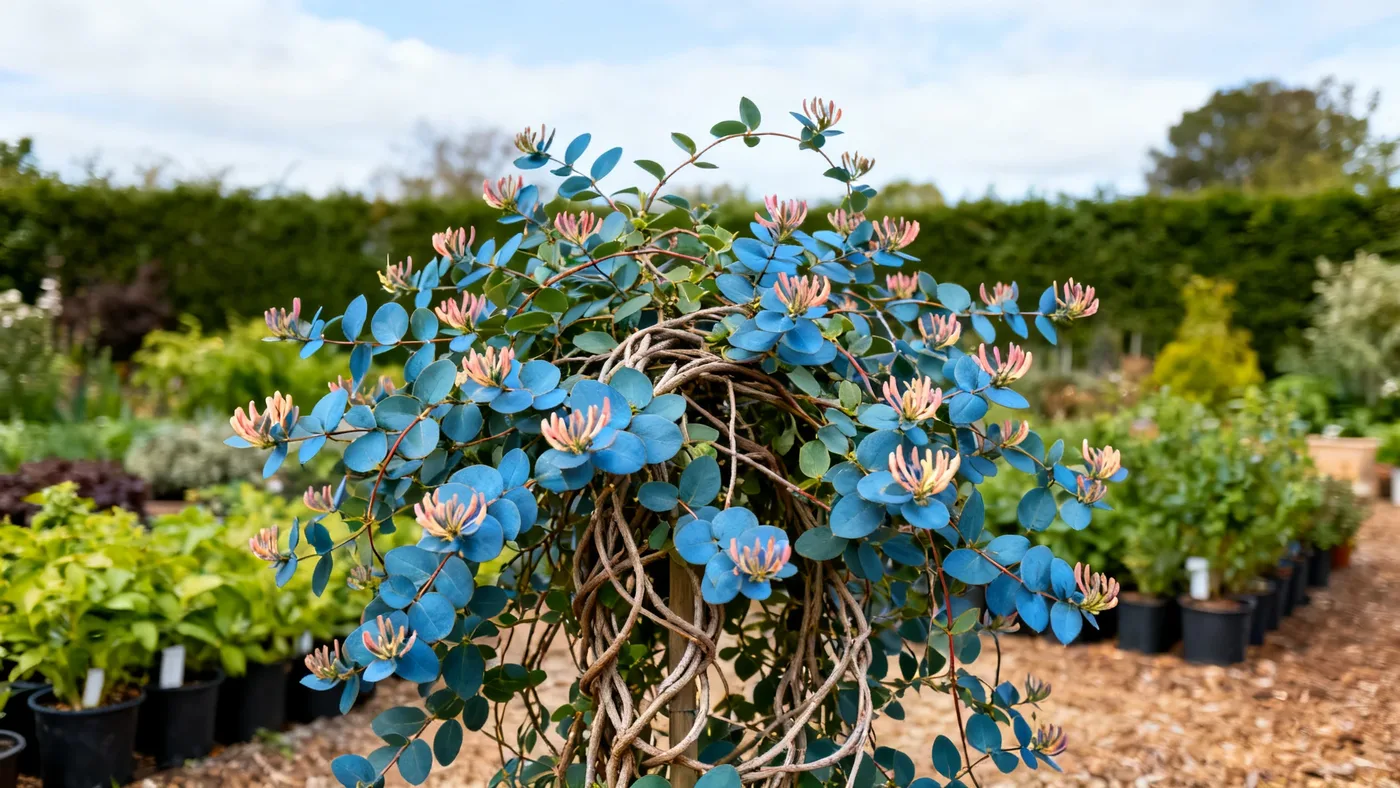
Fertilizing Scentsation Honeysuckle: What It Actually Needs
Scentsation Honeysuckle is a fast-growing vine with modest nutritional demands. Unlike heavy feeders that drain soil nutrients quickly, this cultivar produces abundant creamy-gold flowers with minimal fertilizer support. The key is feeding it at the right time with the right product, then stepping back. Too much nitrogen actually reduces flowering and promotes excessive leafy growth at the expense of fragrance.
Why Scentsation Honeysuckle is a Light Feeder
This vine grows 1 to 2 feet of new twining growth per year once established, which is vigorous by most standards. Yet it achieves this from average soil with minimal intervention. The parent species, Lonicera periclymenum, is a hardy European native that has thrived in gardens for centuries without commercial fertilizers.
Scentsation inherits that resilience. Overfertilizing does more harm than good: excess nitrogen delays flowering, thickens foliage at the vine's expense, and can reduce the intensity of fragrance. Your goal is to give the plant just enough nutrient boost in spring to support its natural growth and flowering cycle, then leave it alone.
Best Fertilizer Types for Scentsation Honeysuckle
The most reliable choice is a balanced, slow-release fertilizer applied in early spring. "Balanced" means roughly equal parts nitrogen, phosphorus, and potassium (a 10-10-10 or 12-12-12 formula, for example). Slow-release formulations dissolve gradually over several months, delivering steady nutrition without the shock of water-soluble products.
You have several options within this category:
- Granular slow-release: Scatter around the base in early spring. Most popular for home gardeners because it requires no mixing and lasts 3 to 4 months.
- Pellet fertilizers: Similar to granular but in larger prill form. Same timing and results.
- Organic options: Compost, well-rotted manure, or organic all-purpose fertilizers (5-5-5 or similar) work well if you prefer. Apply thicker layers since they are less concentrated.
Avoid high-nitrogen fertilizers (like lawn formulas at 20-5-5) and avoid applying fertilizer after mid-summer. Late-season feeding pushes tender new growth that frost can damage.
Spring Fertilizing: Your Primary Window
The most critical feeding window is early spring, just as new growth begins and flower buds are forming. In zones 5 to 9, this typically means late February to early April, depending on your region's last frost date and when the vine leafs out.
Apply fertilizer when the soil is moist but not waterlogged. If your area has had rain, wait a day or two so the soil dries slightly. If spring is dry, water the base thoroughly the day before fertilizing. Moist soil helps the granules dissolve and distribute evenly through the root zone.
This single spring feeding is usually all Scentsation Honeysuckle needs for the entire year. The slow-release formula will still be feeding the plant through early summer bloom and into the reblooming period in fall.
Step-by-Step Fertilizing Guide
- Choose your fertilizer. Select a balanced, slow-release product (10-10-10 or 12-12-12). Read the package to determine the recommended rate per square foot of planting area or per plant.
- Calculate the amount. For a mature vine (3 to 6 feet wide), you typically need 1 to 2 tablespoons of granular fertilizer, spread over the drip line (the area beneath the vine's outer leaves). Check the package label for your specific product, as formulations vary slightly.
- Clear the base. Remove any mulch, fallen leaves, or debris directly around the stem. You want the fertilizer to reach soil, not sit on top of organic matter.
- Sprinkle evenly. Distribute the granules in a circle around the vine, staying 6 to 12 inches away from the main stem to avoid contact with living tissue. Spread them from where the roots begin (usually a few inches from the stem) outward to the drip line and slightly beyond.
- Water thoroughly. Water the area deeply until the soil is moist 6 inches down. This activates the granules and carries nutrients into the root zone. If your spring rainfall is reliable, one good watering is enough; if conditions are dry, water again after a few days.
- Replace mulch. Once the area is moist, replace any mulch you removed. Keep mulch at least 3 inches away from the stem to prevent rot.
- Do nothing else for the year. Resist the urge to fertilize again in summer. The slow-release formula is still active, and extra feeding will suppress blooming.
Summer and Fall Feeding: When Less is More
Scentsation Honeysuckle often reblooms into fall in many climates. This second flush of flowers comes naturally from the vine's energy reserves and the residual fertilizer from spring. You do not need to feed again.
In poor soils (sandy, compacted, or nutrient-depleted), a very light supplemental feeding in late June can support continued flowering. If you choose to do this, use half the spring rate and opt for a liquid, dilute fertilizer rather than granular (which could encourage excessive foliar growth). But this is optional and not necessary for healthy bloom.
Never fertilize after August 1st. Late feeding triggers tender new growth that winter frost will damage, weakening the vine and reducing next spring's flower buds.
Common Mistakes to Avoid
- Overfertilizing because the vine looks healthy. Healthy vines do not need heavy feeding. More fertilizer does not equal more flowers; it often means leafy growth at flowering's expense.
- Using high-nitrogen lawn fertilizer. These produce thick foliage and few flowers. Stick to balanced formulas.
- Fertilizing in summer or fall. Late feeding delays the vine's natural dormancy and can result in winter dieback or weak spring growth.
- Applying granules directly against the stem. This can scorch live tissue. Always maintain a 6 to 12-inch buffer from the main stem.
- Skipping the water-in step. Dry granules sitting on soil do not activate. Thorough watering is essential for the fertilizer to work.
- Assuming container plants need the same feeding as in-ground vines. Potted plants do deplete soil faster and may benefit from one additional light feeding in mid-May. Check the soil moisture and appearance first.
What Results to Expect
After a spring fertilizing, you should observe stronger leaf emergence and denser flower production within 4 to 6 weeks. The vine's natural growth rate of 1 to 2 feet per year supports vigorous new stem development, and fertilizer removes any marginal nutrient limitation.
Fragrance may also seem more intense. Scentsation Honeysuckle is strongly and sweetly fragrant, especially in evening hours, but adequate nutrition helps the plant allocate resources to flower production and scent compounds.
Do not expect overnight transformation. Slow-release fertilizers work gradually, and the vine's growth is naturally measured. By midsummer, a well-fertilized vine will be filling its support and producing abundant blooms compared to unfertilized or overfertilized neighbors.
A single spring feeding typically sustains the vine through one full growing season. If the vine shows signs of nutrient deficiency in midsummer (pale leaves, slowed growth, fewer flowers despite adequate water and light), consult your local extension service about soil testing. This can identify whether true nutrient depletion has occurred or whether other factors (water stress, poor drainage, or pest damage) are at play.
For more guidance on overall care and growing conditions, see the Scentsation Honeysuckle care guide.
Quick Reference: Scentsation Honeysuckle Fertilizing Checklist
| Task | Timing | Details |
|---|---|---|
| Spring fertilizing | Late February to early April (after last frost, as new growth appears) | Apply 1-2 tablespoons balanced slow-release (10-10-10 or 12-12-12) per mature vine (3-6 feet wide) |
| Prepare the site | Before applying fertilizer | Clear mulch/debris from base; stay 6-12 inches away from main stem |
| Water in | Immediately after fertilizing | Deep watering to 6 inches; activates granules and carries nutrients into root zone |
| Optional summer feeding | Late June (only in poor soils; skip if in-ground soil is average or better) | Use half the spring rate; apply liquid fertilizer diluted per label |
| Stop fertilizing | August 1st or earlier | No late-season feeding; prevents tender growth and winter damage |
| Check for rebloom | Late summer through fall | Many regions see secondary flowering; no additional fertilizer needed |