Is Scentsation Honeysuckle Deer Resistant? What to Expect
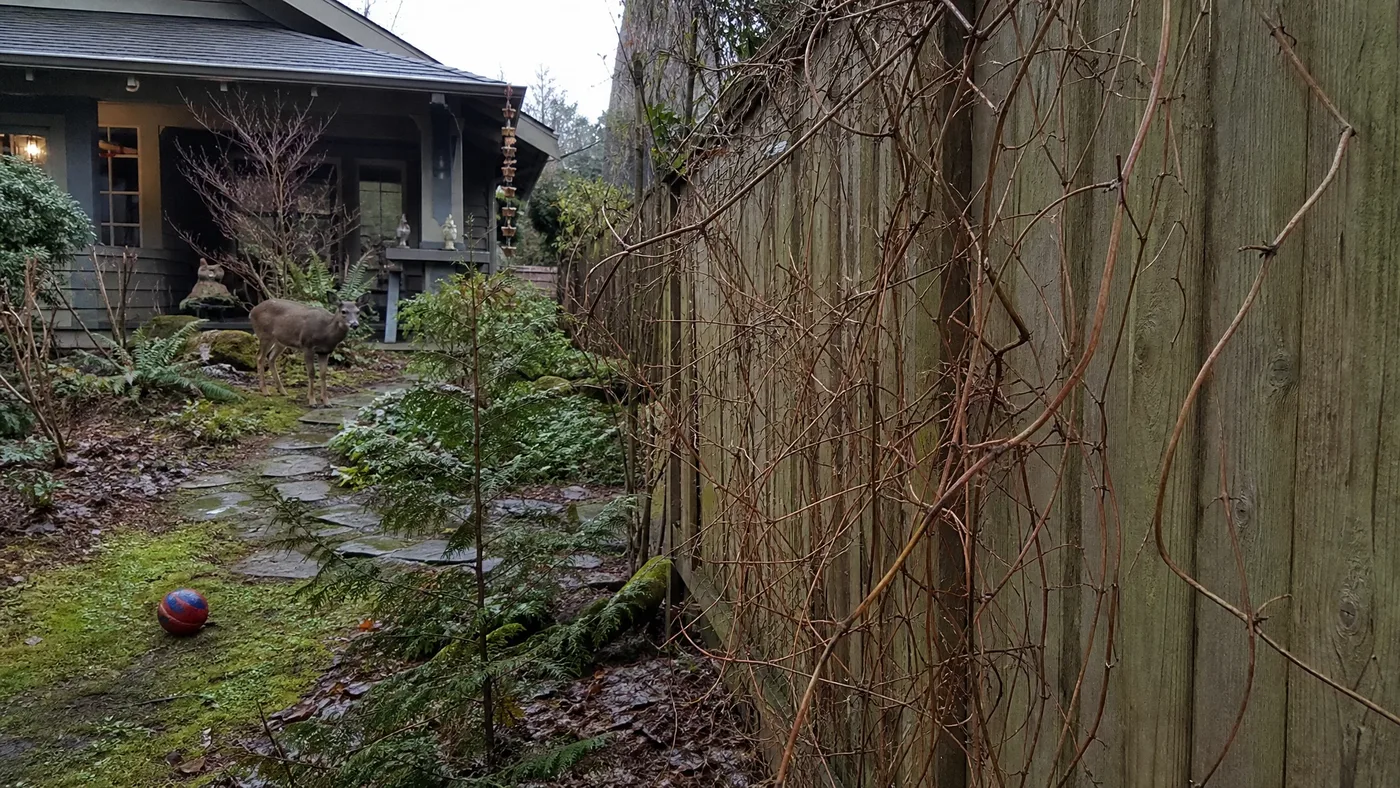
A neighbor of one of our customers replaced a browsed hedge twice before anyone stopped to ask what deer actually eat. Each replacement went in on the same hopeful assumption, that a plant with a good reputation would simply be left alone. The money went into plants when it should have gone into a plan.
Scentsation Honeysuckle invites the same assumption. People expect "deer resistant" to mean untouched, and the plant itself makes no such promise. What it does offer is better than nothing, and it is cheap to plan around once you know where the real risk sits.
This guide covers everything you need to know about how deer treat Scentsation Honeysuckle, from the leaves and flowers to young vines, guards and a realistic multi-year budget.
Deer Never Touch Scentsation Honeysuckle, Supposedly
Read enough plant lists and you will see the same line repeated: deer leave honeysuckle vines alone. We would call that partly true. The species, Lonicera periclymenum, carries a #deer resistant tag, and Scentsation is a selection of that species. That is the best evidence we can point to, and it is a good sign.
What the Tag Covers and What It Skips
The note is a species-level one. None of the sources we rely on report a deer trial on Scentsation itself, and none describe a garden where it was watched through a hard winter. So we treat the tag as a strong hint rather than a guarantee. A hint is enough to choose this vine over a plant deer actively seek out. It is not enough to skip planning altogether, and a plan costs far less than a replacement.
Why a Mature Vine Has Margin
Scentsation is a vigorous climber, listed at about 13–26 feet at maturity, a bit taller than the 10–20 feet typical for the species. An established vine carries a great deal of foliage, most of it above where a deer reaches easily. Light nibbling at the base barely registers on a plant that size. What matters is whether the vine ever gets the chance to grow into it.
So the belief settles like this. Deer are unlikely to make this vine a first choice, and you should not plan as if they are incapable of trying it. "Mostly ignored" is the honest version of the claim.
Does Scentsation Honeysuckle Foliage Taste Bad to Deer?
A close relative shows how a label and reality sit side by side. Coral honeysuckle is tagged for deer resistance, yet the plant page for that species still says the foliage may be eaten by white-tailed deer. Both statements are true at once, and that is exactly how to read the tag on Scentsation.
"Resistant" describes a preference, not a barrier. Deer may still eat these plants if it comes down to a choice between eating something they don't like and starving, but most of the time they pass over them in favor of other plants. Deer-proof would mean never. No plant earns that word, and no source we use claims it for any honeysuckle.
What Hunger Does to the Menu
The practical consequence is that your risk depends on what else is around. A vine beside a garden full of tastier choices is likely to be skipped. The same vine in a bare, picked-over yard late in a hard winter is a different story, because a deer that has run out of first choices starts working down the list. That is why two neighbors can report opposite results with the same plant.
Bare Stems Are Still Stems
Scentsation is deciduous with oval leaves, so it stands bare for part of the year. We would not count that as protection. A leafless stem is still a stem, and what deer do with it depends on how hungry they are, which we cannot predict for your neighborhood. Your local extension service can tell you how heavy pressure runs in your area.
It also means a guard that only covers the leafy months leaves a young vine exposed when food is scarcest. Plan to keep protection in place through the first winters, not just the first summer.
Flowers and Berries Get Different Treatment
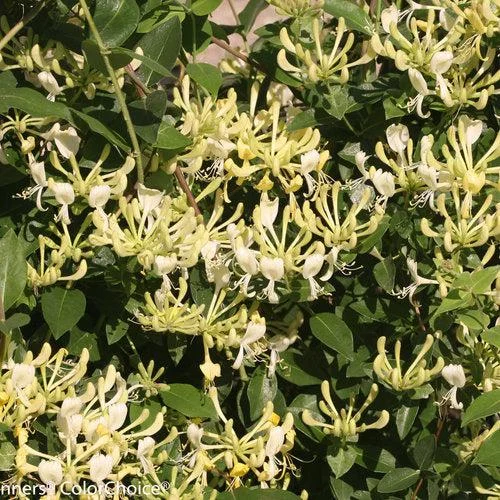
Take a vine in late summer, covered in creamy white to yellow flowers with the scent carrying across the yard. It is tempting to assume that blooms and fruit share the leaves' good standing. The sources do not back that either way. Nothing we found separates how deer treat the leaves from how they treat the flowers or the fruit of this vine.
The Flowers
Scentsation flowers from summer into autumn, and extension writers credit it with good fragrance. Strong scent does not tell you whether deer will browse it, so do not treat perfume as a deterrent. Fragrance is there for you and the pollinators, not as a fence.
What we can say is that flowers form on growing stems. A tip that gets browsed is a tip that is no longer growing toward its summer flowers. For this plant, the cost of browsing shows up as lost bloom as much as lost leaf, which is the part you planted it for.
The Berries
The fruit is ornamental and not to be eaten. The University of Washington notes that European honeysuckles are associated with digestive tract problems in children, and we cover that in our guide on whether Scentsation Honeysuckle is toxic to pets and children.
That is a statement about people. It does not tell you what a deer will do, so do not rely on berries being "poisonous" to protect the plant. The leaf tag is the only deer-specific note we have, and we do not stretch it to flowers or fruit. If you see browsing on flowering shoots, treat it like any other browsing.
Young Vines Are Fair Game
Picture a vine planted last spring, one stem and a small cluster of leaves sitting at nose height beside a trellis. Now picture the same plant several years on, with growth far above anyone's reach. The belief that both face the same risk is the one we push back on hardest, because the two plants are in completely different positions.
Why Small Plants Take the Hit
A new planting has a small root system and almost all of its foliage within reach. Every bite removes a large share of what the plant has. An established vine has stored energy and height on its side, and most of its leaves are well out of reach. Lost tips are replaced quickly.
One of the most common questions we get is whether a nibbled first-year vine will recover. Often it will, because the roots are intact and the plant is vigorous. But repeated loss in the same season slows establishment and can set you back a full year. Cheap protection at the start beats replacement later.
Giving the Vine a Head Start
Two choices help. Start with a plant that already has some size, and our buying guide to container sizes explains what each size gives you. Then plant it well, as in our planting guide, so it puts its energy into climbing out of reach.
Because Scentsation is a vigorous climber, a good first season can carry the growing tips up faster than you might expect. Give the stems a support that starts at the base so they climb instead of sprawling at nose height.
Protecting a New Scentsation Honeysuckle Planting
People tend to picture protection as a tall fence around the yard, priced accordingly. For this plant you do not need that. Scentsation is a narrow vine, about 1.6–3.3 feet across at maturity, so the part that needs guarding is a small footprint around the base and the lowest stretch of the support.
Cheap Guards and When to Use Them
The table below compares the options we would reach for, ordered from least to most effort. Fence heights and repellent rules vary, so check with your local extension service before committing.
| Guard | Best for | Watch for |
|---|---|---|
| Wire cylinder around the base | First season, lowest foliage | Leave room for the stems to grow through the mesh |
| Mesh or netting on the lower trellis | Vines already climbing | Keep it taut so nothing tangles |
| Stakes with a temporary mesh collar | Several vines in a row | Check ties after storms |
| Repellent products | Short-term backup | Reapplication, and local rules on use |
Timing the Guard
Fit the guard at planting, not after the first bite. The cost is the same either way, but only one of them saves the first flush of growth. Keep it on until the growing tips are comfortably above the height deer reach, and then remove it.
Check it at the turn of each season. Mesh that fit a small plant in spring can pinch a thicker stem by autumn, and a guard that has slipped is worse than none because it gives you false comfort.
If Browsing Starts
In our rows, we often see people react by cutting the plant back hard, which makes things worse. Work through these steps instead.
- Confirm that deer are the cause. Insects can leave damage too, and our guide to common Scentsation Honeysuckle pests and problems helps you rule them out.
- Guard the plant right away with the cheapest option that covers the damaged zone.
- Tidy only the broken or ragged stems, following the timing in our pruning guide.
- Keep watering normally so the roots can fuel new growth.
What Scentsation Honeysuckle Asks of a Deer Garden
Think of this vine as a budget spread over several seasons. The spending is front-loaded and then fades, which is the kind of cost we find easiest to plan for.
The first seasons. The vine needs a guard and a bit of attention. This is where almost all the money and effort go, and it is small because the part you guard is small. A cylinder or a length of mesh covers it.
The middle seasons. It needs a check each growing season to see whether pressure has changed. If the tips are climbing above easy reach, the guard can come off. If not, it stays one more year.
The established years. It mostly looks after itself and returns fragrance from summer into autumn. Occasional nibbling at the base is a nuisance rather than a loss.
The more useful investment is placement. Plant it where it is not the only green growth within reach, and where you can see it from a window, so a change in browsing is noticed early. Cost grows with delay, not with the plant.
It also asks you to match the species facts to your own climate. The species grows in zones 5–9, and deer pressure varies even within a zone. A vine that grows untouched in one neighborhood may be nibbled in the next. Watch your own site for a season before deciding how much protection to build.
Planning Around Deer With Scentsation Honeysuckle
Deer resistant means likely to be passed over, not safe in every season. The leaves are the best-supported part of the claim, the flowers and fruit are an open question in the sources, and young vines carry the highest risk. Guard the base early, watch the tips, and leave established growth alone.
For budgeting, plan a modest line over the first few seasons for temporary guarding, and then stop.
Scentsation Honeysuckle
Nursery-grown Scentsation Honeysuckle in sizes from 2 GALLON, shipped to your door.
From $94.30
Shop Now →Scentsation grows best for us in moist, well-drained beds that get sun for much of the day with a little shade, and we keep an eye on its soft new tips for nibbling. Because we run a grower-owned operation, each plant we send out is one we would happily put in our own ground. If deer are on your mind, we would love for you to browse the Scentsation we have ready.