Is Scentsation Honeysuckle Native to the United States?
Woodbine twined through the hedgerows of old England long before any American garden had a honeysuckle in it. Scentsation Honeysuckle is a selection of that same vine, Lonicera periclymenum, so the plain answer to the title is no. It is native to Europe, not to the United States.
The answer matters for two reasons. Native-plant gardeners choose plants for the insects and birds they support. And the word honeysuckle also covers some of the worst invaders in the eastern states, so a careful buyer has reason to worry. Non-native does not mean invasive, and this vine shows why.
We'll walk you through where the species came from and how the cultivar got its name, then its history in European hedgerows and its record in American gardens, and finally the rules we give gardeners who lean native.
Where Lonicera Periclymenum Came From
The species grows wild across a long arc of the Old World. NC State lists its native range as the UK and Europe, north to Scandinavia and south to North Africa and Greece. The U.S. Forest Service draws the edge wider, naming Europe, North Africa and western Asia. The sources disagree on the eastern edge. None of them list North America.
A range that runs from Scandinavia to the Mediterranean explains why the vine adapts well. Extension sources list full sun to partial shade and moist, well-drained soil as best. In our rows we see the same thing: it wants roots in cool, evenly moist ground and leaves in light.
Hardiness Across That Range
NC State gives the species zones 5a through 9b. The UConn plant database says hardy to zone 4. We have no verified USDA zone for Scentsation itself, so we plan around the species range of 5 to 9. In zone 4 or at the warm end of zone 9, treat it as an experiment and ask your local extension service what has worked nearby.
What the Wild Vine Looks Like
The wild species is a deciduous twining climber with oval leaves. It grows 10 to 20 feet tall and 3 to 6 feet wide. It climbs by wrapping its stems around whatever stands nearby.
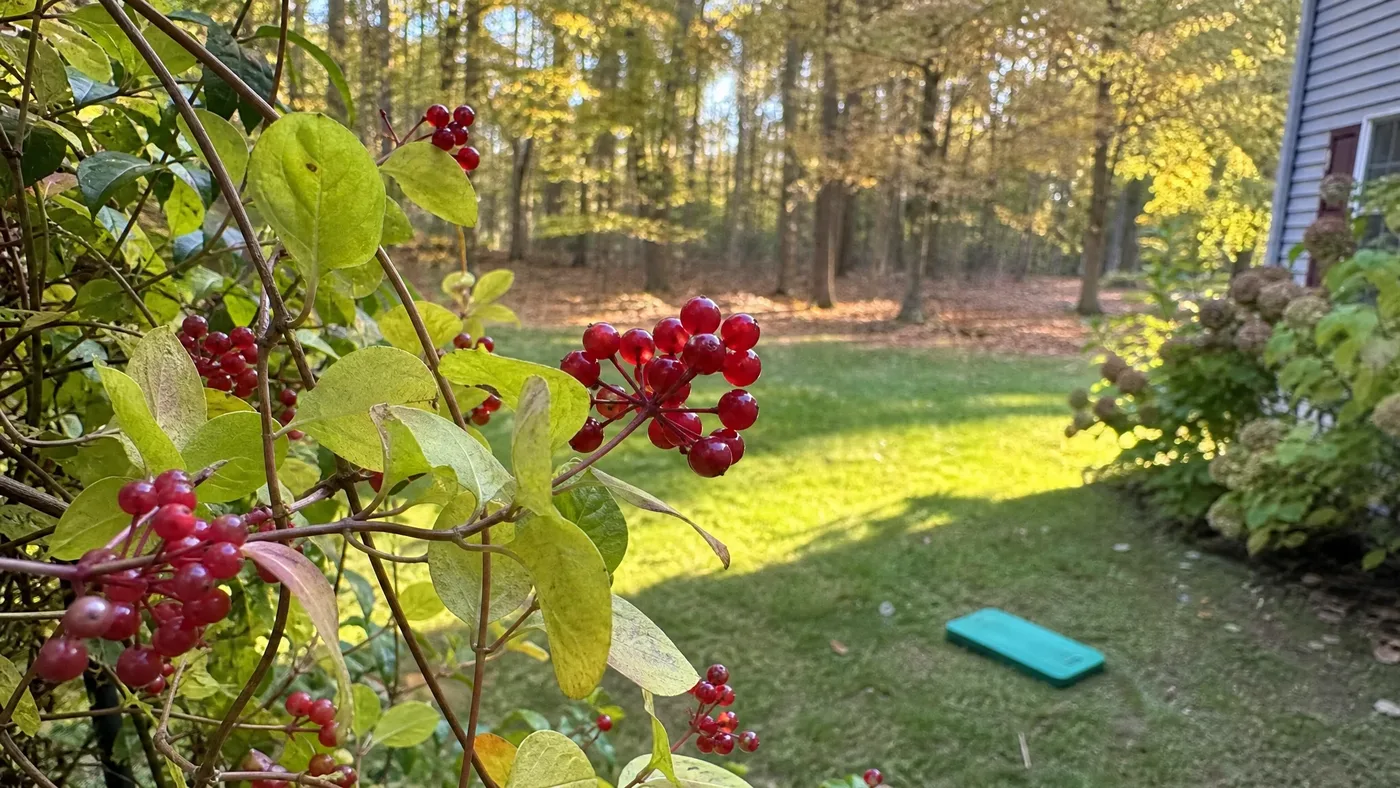
The wild flowers are fragrant and yellowish white, usually with a purplish outside. They open from June to September. The berries are deep red, about 0.25 inch across, and ripen in September.
How Scentsation Honeysuckle Got Its Name
We cannot give you a breeder or a release year for Scentsation, and we will not guess. What we can tell you is what the name promises. The UC Master Gardeners of Sonoma County describe the cultivar as highly scented as its name suggests. The name is a plain description of the plant.
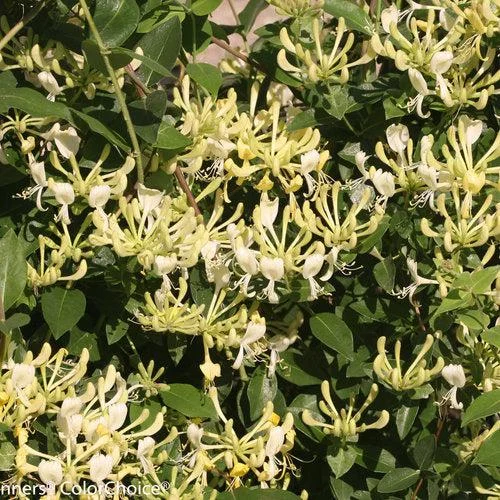
A cultivar name marks a selection kept for particular traits. Here they are creamy white to yellow flowers, exceptional fragrance and a long season of bloom. A named selection has to stay true to type, so growers propagate it from cuttings rather than seed. That is why the species numbers and the cultivar numbers should not be swapped.
Where the Cultivar Departs From the Species
The table sets the wild species against Scentsation. Cultivar figures are converted from meters to feet.
| Trait | Wild species | Scentsation |
|---|---|---|
| Height | 10–20 ft | About 13–26 ft |
| Spread | 3–6 ft | About 1.6–3.3 ft |
| Bloom | Spring and sporadically through summer | Summer to fall |
| Flower color | Cream, gold, pink, purple and white across the species and its cultivars | Creamy white to yellow |
The two height ranges come from different sources, so we plan for the overlap of about 13 to 20 feet. The narrower spread is the useful difference. Scentsation is a tall, slim vine, and our size and growth rate guide shows how that plays out in the first seasons.
Bloom timing is the other gap. Sources place the cultivar's flowers anywhere from late spring through summer into fall, so expect the first flush to vary with your climate.
Woodbine in European Hedgerows and Folklore
Woodbine is the old common name for this species, and it still turns up on extension plant pages. Illinois Extension lists the plant as Honeysuckle, Woodbine. The name belongs to the vine as it grows in the wild, scrambling through other plants rather than standing alone. That habit is how a plant that reaches 10 to 20 feet gets by on a spread of only a few feet.
Folklore around woodbine mostly circles two things, the evening scent and the way the stems wrap whatever they climb. We will not repeat stories we cannot source. The scent is easy to confirm for yourself on a warm evening.
Why the Scent Peaks After Dark
The fragrance is more noticeable after dark and attracts moths as its native pollinators. The species is pollinated by long-tongued bees, butterflies and moths, and the tubular flower shape fits them. One of the most common questions we get is whether the scent really is stronger after sunset. It is, so plant it where you sit in the evening.
The Berries Stay Ornamental
The red berries ripen in September and are ornamental only. Do not eat them. The University of Washington's plant library associates European honeysuckles, this species among them, with digestive tract problems in children, such as nausea, vomiting and diarrhea. Our guide on pet and child safety covers placement in detail.
Scentsation Honeysuckle Arrives in American Gardens
We have no verified date for the first planting of this species in America, and no source we trust gives one. What the sources show is where it lives now. Penn State Extension says of the species that it is native to Europe, has naturalized in Pennsylvania and is not considered invasive. Naturalized means it can persist outside cultivation. It does not mean it takes over.
Where It Has Settled
The species occurs in North America primarily in Nova Scotia, Ontario, New England and the Pacific Northwest. Those are mostly cooler northern places and the Pacific coast, which fits a vine from the cool, moist side of Europe. Gardeners in the hot interior or the Deep South should check local conditions first.
How the Cultivar Behaves in a Garden
Scentsation is a vigorous climber. Given a good support, it adds long stems each season and can reach 13 to 26 feet at maturity on a spread of only 1.6 to 3.3 feet. That narrow footprint keeps it tidy. The species is deer resistant, but we still tell customers to protect young plants until they have size.
Problems are modest. Expect powdery mildew and fungal leaf spot on the foliage, and honeysuckle aphids, thrips and glasshouse whitefly among the insects. Good airflow and a watch on new growth catch most of it early.
Non-Native Is Not the Same as Invasive
Four terms get mixed up in this conversation. The table separates them, with one honeysuckle as an example of each.
| Term | Meaning | Honeysuckle example |
|---|---|---|
| Native | Occurs naturally in your region | Coral or trumpet honeysuckle in the southeastern U.S. |
| Non-native | Comes from another region | Scentsation, from Europe |
| Naturalized | Non-native, but able to grow outside gardens | Lonicera periclymenum in Pennsylvania |
| Invasive | Spreads aggressively and harms other plants | Japanese honeysuckle |
The invasive honeysuckles came from Asia, mostly China and Japan. Penn State counts six shrub species and one vining species among them. Scentsation is none of the seven. The one invasive vine is Japanese honeysuckle, which can smother plants it climbs over. Our comparison with Japanese honeysuckle shows how to tell the two apart.
What the Numbers Say About Spread
Scentsation spreads 1.6 to 3.3 feet. That is a plant that climbs up, not one that blankets the ground. Mississippi State Extension says this selection is native to Europe but does not appear on any invasive species list. Lists differ by state, so check with your local extension service before you buy.
Why Buyers Get Confused
Mississippi State also notes that Scentsation has flowers that look very similar to Japanese honeysuckle. The resemblance is why people hesitate, and looks alone cannot settle it. Check the botanical name on the tag. Scentsation is Lonicera periclymenum 'Scentsation'. Japanese honeysuckle is Lonicera japonica.
Using Scentsation Honeysuckle in a Native-Plant Garden
Some native-plant advice says to plant nothing from outside your region. We do not treat that as a flat rule. What we tell customers is to ask what a plant does to the ground around it, not only where it was born. A non-invasive vine can sit in a native planting if it has a defined job and a defined place.
These are the rules we give people who lean native:
- Build the planting on native plants first. Coral or trumpet honeysuckle is native to the southeastern United States, so check your own state's list for natives closer to home.
- Give Scentsation one support and one job, such as a fence panel or an arbor near a seat where the evening scent reaches you.
- Size the support for 13 to 26 feet of height and under 3.5 feet of width. A narrow trellis suits it better than a native shrub it would climb through.
- Keep Japanese honeysuckle and the invasive shrub honeysuckles out of the yard. Native honeysuckles have solid stem pith, which helps you identify an unknown plant.
- Watch for seedlings that appear away from the vine each year, and pull any you find.
Moths and bees visit the flowers, and our guide to hummingbirds and pollinators covers who else comes. Pair the vine with natives that bloom at other times, so the garden feeds visitors across the whole season.
Where Scentsation Honeysuckle Belongs in Your Garden
Scentsation Honeysuckle is native to Europe and not to the United States. It is also not invasive, and no source we use puts it on an invasive list. For a native-minded gardener it is a small, deliberate exception, best used as one scented climber among natives.
Take three steps before planting. Check your state's invasive list, set one support sized for 13 to 26 feet, and choose the natives that will carry the rest of the planting. Our planting guide takes it from there.
Scentsation Honeysuckle
Nursery-grown Scentsation Honeysuckle in sizes from 2 GALLON, shipped to your door.
From $94.30
Shop Now →Our Scentsation vines live on our farms in beds that stay moist but drain well, with sun for much of the day and a bit of shade. We are a small business of growers who raise every plant we sell, and we check each vine's stems, leaves and roots for the problems covered here. If you have settled on a European climber among your natives, begin with one of ours.