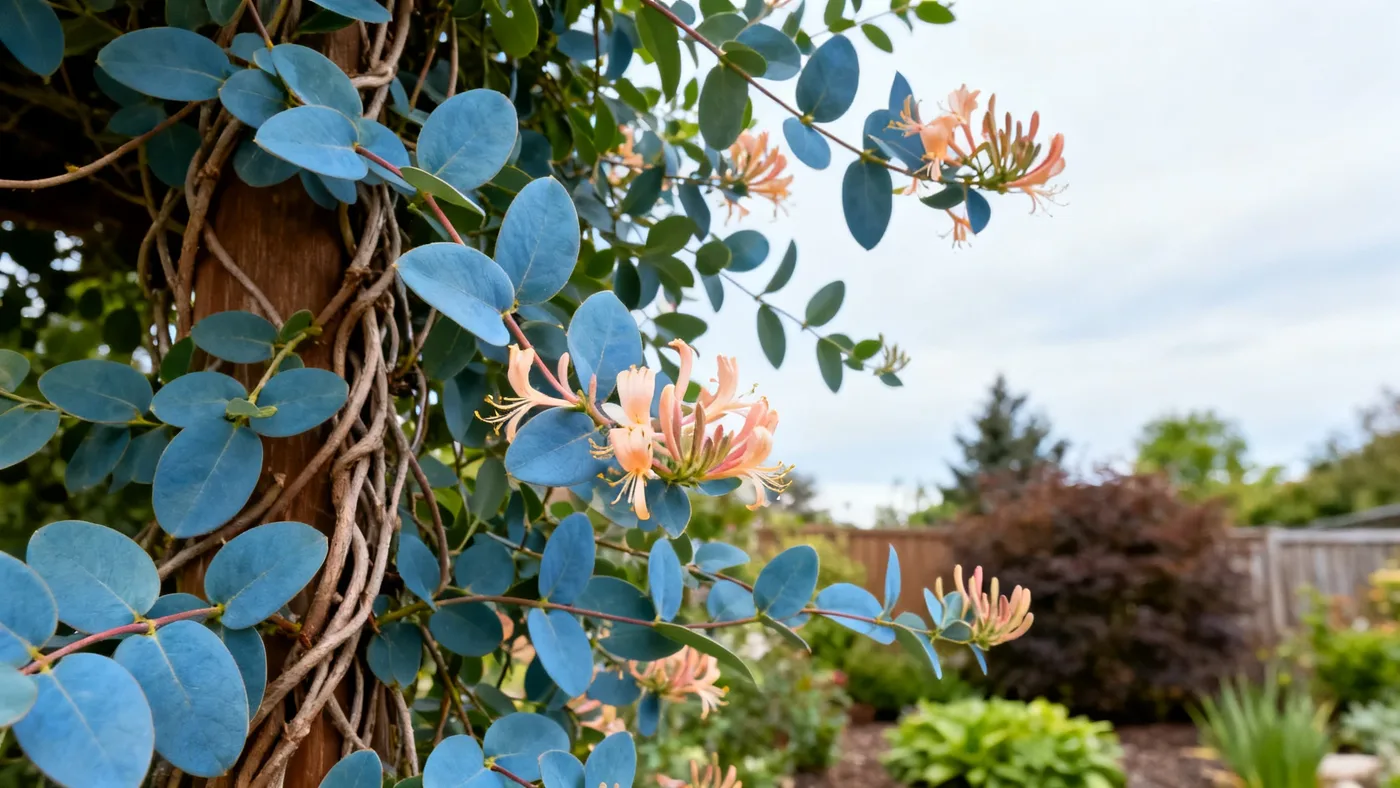
Scentsation Honeysuckle for Hummingbirds and Pollinators
Scentsation Honeysuckle is one of the most effective ways to fill your garden with hummingbirds, bees, butterflies, and night-flying moths. Unlike invasive honeysuckles that spread aggressively and choke out native plants, this cultivar offers abundant nectar and blooms from late spring through fall, without the ecological baggage. Plant it on a trellis, arbor, or fence, and watch your garden become a crossroads for pollinators seeking reliable, sweetly fragrant flowers.
1. Why Hummingbirds Choose Scentsation Honeysuckle
Hummingbirds have narrow, focused food preferences. They seek tubular flowers with abundant nectar, and Scentsation Honeysuckle delivers both in high volume. The flower structure is perfectly proportioned for a hummingbird's long beak and feeding style. Each bloom opens with a creamy yellow hue flushed with pink or purple in the bud, then ages to pure gold, creating a visual progression that signals available nectar.
The vine blooms heavily from late spring through summer, with reblooming into fall in many climates. This extended window matters enormously to hummingbirds migrating south in autumn or raising successive broods through the season. A single well-established vine can support multiple hummingbirds competing for feeding territory, especially if you pair it with other nectar sources nearby.
Practical takeaway: Plant Scentsation Honeysuckle where you can see it from a window or seating area. Hummingbirds are bold and will visit even in well-trafficked garden spots. Position the trellis or arbor in full sun to maximize flower production.
2. Nectar Flow from Pollinators' Perspective
Bees, butterflies, and moths all visit Scentsation Honeysuckle for the same reason hummingbirds do: consistent, abundant nectar. The vine's fragrance is strongly sweet and most noticeable in the evening, which signals that night-flying moths are part of this plant's pollination ecology. During the day, honeybees work the flowers alongside carpenter bees and other native bee species. Butterflies land on the bloom clusters for long feeding sessions, especially in mid to late summer.
The timing of this nectar production is critical. Many native bee populations are stressed by late spring and summer, when flowering plants have finished their peak show. Scentsation Honeysuckle steps in to fill that gap, offering a reliable food source precisely when pollinators need it most. The reblooming pattern into fall extends this window even further, catching migrating monarchs and other butterfly species fueling their journey.
Practical takeaway: Avoid pesticides within 50 feet of your honeysuckle vine. Systemic insecticides will kill pollinators as effectively as target pests. If spider mites or scale become a problem, spray on calm evenings after pollinators have stopped foraging.
3. Fragrance as a Pollinator Signal
The strong, sweet fragrance of Scentsation Honeysuckle isn't just pleasant for gardeners. It's a biochemical signal to pollinators that food is available. Research on honeysuckle species shows that fragrance intensity directly correlates with nectar quantity and quality, so pollinators have learned to follow the scent. The peak fragrance in evening hours tells night-flying moths exactly when and where to find blooms worth visiting.
This fragrance is one of the key differences between Scentsation Honeysuckle and the invasive Japanese honeysuckle (Lonicera japonica) that has overrun wild areas across much of the eastern US. While both attract pollinators, Scentsation was deliberately selected as a well-behaved cultivar that won't spread uncontrollably. The trade-off is worth it: you get the pollinator benefits without the ecological damage.
Practical takeaway: Full sun produces the strongest fragrance and the heaviest bloom set. If you have afternoon shade in a hot climate, the vine will still flower, but morning sun is non-negotiable for peak nectar production.
4. Planting Scentsation Honeysuckle for Maximum Pollinator Impact
The most common mistake gardeners make is planting honeysuckle on a weak or wobbly support. The vine grows fast, reaching 1 to 2 feet of new twining growth per year once established. Within a few years, an unpruned vine on an inadequate trellis becomes a tangled sprawl, and tangled vines don't flower as well. Pollinators also have a harder time accessing blooms buried deep in the mass.
Plant Scentsation Honeysuckle in spring or fall on a sturdy trellis, arbor, or fence. Space multiple vines 3 to 6 feet apart if you're creating a pollinator corridor. The soil should be well-drained and average in fertility. The vine is adaptable to a range of soil types and pH levels around 6.0 to 7.0, and it tolerates moderate drought once established, though consistent moisture during the growing season produces more abundant blooms.
Practical takeaway: Install your support structure before planting, not after. A sturdy, clearly defined trellis or arbor teaches the vine to grow in one direction, making it easier to maintain and keeping blooms accessible to pollinators.
5. The Fall Pollinator Bonus
Most spring-blooming plants finish flowering by mid-summer, leaving pollinators scrambling for food in late August through September. Scentsation Honeysuckle rebounds into fall, offering a crucial food source that many other vines and flowering plants don't provide. This is especially valuable for monarch butterflies fueling their migration to Mexico and for late-season bumblebees that must build up fat reserves before winter.
The reblooming isn't automatic and doesn't happen everywhere with equal intensity. The plants perform best in zones 5 through 9, which covers most of the eastern US and much of the Midwest and South. The vine is deciduous to semi-evergreen in mild climates, so in warmer zones it may hold foliage and continue blooming through light frosts. A light prune after the first flush of bloom encourages the secondary flowering and tidies the vine at the same time.
Practical takeaway: After your honeysuckle finishes its main bloom flush in mid-summer, give it a light pruning. Remove any dead or tangled stems and cut back wayward growth. Water well, and the vine will generate new flowers for fall pollinators.
6. Companion Plants That Amplify Pollinator Activity
Scentsation Honeysuckle doesn't bloom year-round, so planting it alongside other pollinator favorites extends your garden's appeal to insects and hummingbirds. Clematis grows well with honeysuckle on the same support, blooming earlier in spring and later into fall. Sun-loving perennials at the base of the vine, such as coneflowers, black-eyed Susans, and zinnias, fill in flowering gaps and give ground-foraging bees and butterflies landing spots.
Climbing roses are another excellent companion for Scentsation Honeysuckle. They share similar growing conditions and training needs, and together they create a denser, longer-blooming focal point that attracts a wider range of pollinators. The combination of honeysuckle's evening fragrance and rose's classic scent also means your garden smells remarkable during morning and evening hours when many pollinators are most active.
Practical takeaway: Choose companions that fill gaps in the blooming calendar. Early spring bulbs and spring-blooming perennials prime pollinators before honeysuckle starts; summer bloomers overlap with the vine's peak; and fall asters and sedum keep the garden alive after honeysuckle fades.
7. Why Scentsation Honeysuckle Beats Invasive Alternatives
Japanese honeysuckle is a pollinator magnet, which is exactly why it has become so invasive. It spreads aggressively, shading out native plants and taking over whole forest edges and hedgerows. Many states list it as a noxious weed, and removing it costs thousands of dollars in labor and management annually. Scentsation Honeysuckle was bred by Proven Winners specifically as a well-behaved alternative that attracts pollinators without the ecological baggage.
Before planting any honeysuckle, check your state and local invasive plant lists. Some regions restrict various Lonicera species. Scentsation Honeysuckle is the safe choice for wildlife gardening, offering the same pollinator benefits as the invasive species without contributing to environmental damage. You get to enjoy hummingbirds and butterflies while protecting native plant communities.
Practical takeaway: If you're replacing an invasive honeysuckle with Scentsation, remove the old vine completely and dispose of it, then plant the new cultivar on the same support. You'll see pollinator activity immediately and know you're gardening responsibly.
8. Maintenance Tips That Keep Pollinators Coming Back
Scentsation Honeysuckle is a light feeder. A balanced, slow-release fertilizer applied in early spring is generally sufficient. Over-fertilizing produces excessive leafy growth at the expense of flowers, which defeats the purpose of growing a pollinator vine. Similarly, overwatering can encourage leaf diseases like powdery mildew, which weakens the plant and reduces blooming.
The vine tolerates moderate drought once established, and regular watering while establishing means consistent moisture during the first growing season and then medium water needs thereafter. Avoid heavy hard-pruning, since older wood contributes to flowering. Light pruning after the first flush of bloom and shaping in late winter or early spring before new growth starts keeps the vine healthy and productive without disrupting pollinator activity.
Practical takeaway: Water deeply but infrequently once the vine is established. Let the top inch of soil dry between waterings. Skip the fertilizer if your garden soil is reasonably fertile. Prune only to tidy, shape, or remove dead wood. This minimal approach keeps your honeysuckle blooming reliably without excessive maintenance.
Quick Reference: Scentsation Honeysuckle as a Pollinator Vine
| Feature | Details |
|---|---|
| Pollinator Attraction | Hummingbirds, bees, butterflies, night-flying moths |
| Bloom Season | Late spring through summer, reblooming into fall |
| USDA Zones | 5-9 |
| Mature Size | 6-10 ft tall, 3-6 ft spread |
| Growth Rate | Fast, 1-2 ft new growth per year once established |
| Sun Requirement | Full sun (best for fragrance and flowering) |
| Water Needs | Consistent while establishing; medium once established |
| Spacing | 3-6 ft apart for multiple plantings |
| Best Planting Time | Spring or fall |
| Invasive Risk | No, bred as a non-invasive alternative |
For complete growing instructions, including pruning schedules, fertilizing guidelines, and troubleshooting common pests and diseases, see our Scentsation Honeysuckle care guide. Whether you're planting your first wildlife vine or expanding an established pollinator garden, this fragrant honeysuckle earns its space through reliable performance and real ecological value.