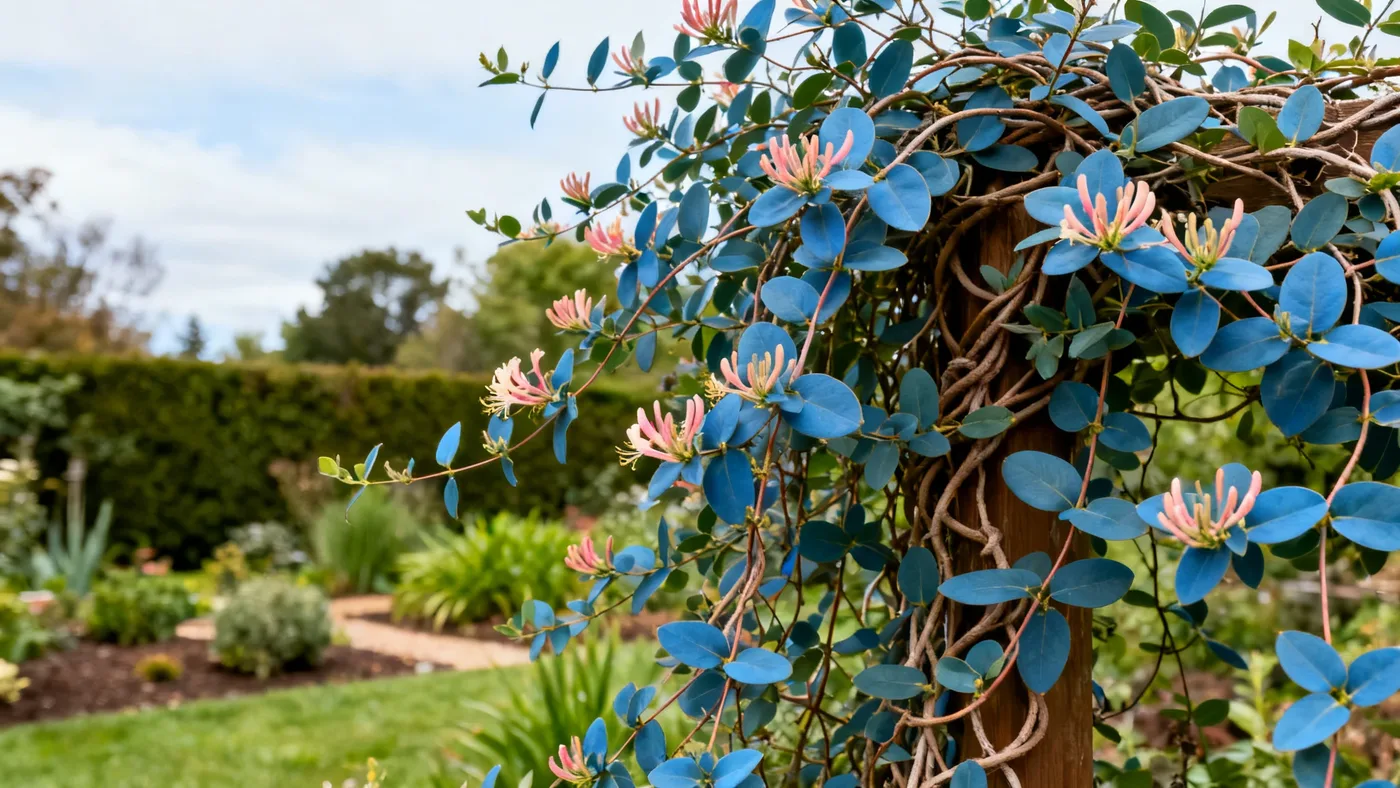
Scentsation Honeysuckle vs Japanese Honeysuckle: Key Differences
If you're looking for a fragrant climbing vine, you've probably encountered both Scentsation and Japanese honeysuckle in your research. They share similar flowers, intoxicating fragrance, and the ability to quickly cover a trellis. But here's the critical difference: one is an ecological threat, and the other was specifically bred to avoid it. Understanding this distinction before planting could save you years of regret.
The Invasiveness Question: What You Actually Need to Know
When gardeners ask "is Scentsation honeysuckle invasive," they're usually worried they're planting a problem. The answer is straightforward: Scentsation Honeysuckle (Lonicera periclymenum 'Scentsation') is not invasive. It was bred and marketed by Proven Winners specifically as a well-behaved, non-invasive alternative to Japanese honeysuckle.
Japanese honeysuckle (Lonicera japonica), by contrast, is aggressively invasive across much of North America. It spreads through runners and seeds, chokes out native plants, and can take over a landscape in a few seasons. Many states restrict or prohibit its sale and planting. If you've seen honeysuckle taking over roadsides or forest edges, it was almost certainly Japanese honeysuckle, not Scentsation.
The botanical names tell part of the story. Scentsation is a cultivated selection of Lonicera periclymenum, the European species. Japanese honeysuckle is Lonicera japonica, and it earned its invasive reputation honestly. This is not a minor difference. It's the difference between a controlled ornamental and a plant that can escape your garden and disrupt local ecosystems.
That said, it's wise to check your state or local invasive plant lists before planting any Lonicera species, since regional restrictions vary.
Side-by-Side Comparison Table
| Characteristic | Scentsation Honeysuckle | Japanese Honeysuckle |
|---|---|---|
| Botanical name | Lonicera periclymenum 'Scentsation' | Lonicera japonica |
| USDA Zones | 5 to 9 | Typically 4 to 11 (varies by source) |
| Height (trained) | 6 to 10 feet | Often 15+ feet if unchecked |
| Growth rate | 1 to 2 feet per year (once established) | Very fast, often aggressive |
| Sun requirement | Full sun to part shade (best sun) | Full sun to shade tolerant |
| Bloom time | Late spring through summer, reblooming into fall | Spring through fall (continuous in warm climates) |
| Bloom color | Creamy yellow flushed with pink/purple in bud | White to cream aging yellow |
| Fragrance | Strong, sweet, most noticeable in evening | Sweet (varies by cultivar) |
| Invasive status | Non-invasive; bred as alternative to Japanese | Aggressively invasive across much of North America |
| Spread control | Stays on support with light pruning | Spreads via runners, seeds, and layering |
| Pruning needs | Light prune after first bloom flush to encourage reblooming | Heavy pruning often required to manage spread |
| Wildlife value | Attracts hummingbirds, bees, butterflies, moths | Similar pollinator value but invasive trade-off |
Scentsation Honeysuckle: Strengths and Weaknesses
Pros
- Non-invasive by design. You can enjoy it without guilt or future removal headaches.
- Cold hardy to Zone 5. Thrives where many vines struggle. Blooms the first season from a container-grown plant.
- Exceptional fragrance. Most noticeable in the evening, when you're likely sitting on the porch. Strong, sweetly scented flowers make it worth the planting space.
- Long bloom window. Late spring through summer with reblooming into fall means months of flowers and fragrance.
- Low maintenance. Moderate drought tolerance once established. Adaptable to a range of soil types. A balanced, slow-release fertilizer in early spring is generally sufficient.
- Beautiful flowers. Creamy yellow flushed with pink and purple in bud, aging to gold. More refined than the aggressive spread of Japanese types.
- Deer resistant. Generally resistant, though not absolute in high-pressure areas.
Cons
- Requires support. This is a twining vine. Without a sturdy trellis, arbor, or fence, it becomes a tangled sprawling mass.
- Moderate water needs while establishing. Needs regular watering for the first season. After that, medium water needs and average consistent moisture.
- Powdery mildew risk. In humid conditions or poor air circulation, expect this fungal disease. Leaf spot also occurs occasionally.
- Not evergreen. Deciduous to semi-evergreen depending on your climate. Minimal winter interest on bare vine.
- Slower growth than aggressive types. If you want instant coverage, this is a patient plant. Growth is roughly 1 to 2 feet per year once established.
Japanese Honeysuckle: Why It's the Wrong Choice for Most Gardens
Why people plant it
- Fast growth. Covers ground or structures rapidly.
- Extreme hardiness. Tolerates harsh conditions, poor soil, and neglect.
- Fragrance. Sweet, though variable by cultivar.
- Inexpensive. Widely available and cheap to buy.
Why it's a problem
- Invasive spread. Spreads via underground runners, seeds, and stem layering. One plant can colonize a large area in a few years.
- Ecological damage. Smothers native plants, degrades wildlife habitat, and is extremely difficult to eradicate once established.
- Restricted in many regions. Many states prohibit sale or planting. Check your local invasive plant list.
- Requires constant management. Heavy pruning and removal of runners is a never-ending task.
- Escapes gardens. Seeds spread to roadsides, woods, and natural areas. One planted Japanese honeysuckle contributes to ecological problems beyond your property.
- Can choke its support. Will girdle and kill trees or damage structures if not meticulously managed.
Which One Should You Plant?
Choose Scentsation Honeysuckle if you want:
- A fragrant, well-behaved climbing vine that stays put
- A plant that blooms the first year and continues through fall
- To garden responsibly without contributing to invasive species spread
- A vine hardy in Zones 5 to 9
- Flowers for hummingbirds, bees, and night-flying moths
- A low-maintenance perennial for trellises, arbors, or fences (with proper support)
- Softly fragrant evening blooms without the guilt
For specific care steps and seasonal guidance, see our Scentsation Honeysuckle care guide.
Only choose Japanese honeysuckle if:
- It is not restricted in your state or region
- You are planting on a remote property with no native plants or forests nearby
- You commit to removing the plant entirely before it sets seed
- You are willing to spend years managing its spread
Honestly, for most home gardeners and landscapers, there is no good reason to plant Japanese honeysuckle anymore. The difference between honeysuckle vines has narrowed: we now have Scentsation, which gives you the fragrance and beauty without the environmental cost.
The Verdict
Scentsation Honeysuckle vs Japanese Honeysuckle is not a close call. Scentsation was engineered by professional breeders to answer the exact question invasive Japanese honeysuckle poses: "How do I get fragrant honeysuckle without destroying the local ecosystem?" It's the answer.
Lonicera periclymenum vs Lonicera japonica comes down to this: one is a responsible ornamental, the other a documented ecological threat. The botanical difference matters because the invasiveness difference defines whether planting honeysuckle is a gardening choice or an environmental liability.
Is Scentsation honeysuckle invasive or not? It is not. It's the non-invasive honeysuckle vine you've been looking for.
Quick Reference: Scentsation vs Japanese Honeysuckle
| Factor | Scentsation (choose this) | Japanese (avoid) |
|---|---|---|
| Invasive risk | None (bred to avoid it) | High (restricted in many states) |
| Zones | 5 to 9 | 4 to 11 (varies) |
| Growth rate | 1 to 2 ft/year (controlled) | Very fast (uncontrollable) |
| Fragrance | Strong, evening-dominant | Variable, often present |
| Support required | Yes (trellis/arbor essential) | Can sprawl; hard to contain |
| Maintenance | Light pruning after bloom flush | Heavy, ongoing pruning |
| First-season blooming | Often (from container plants) | Yes, but then spreads aggressively |
| Environmental cost | None | High (ecosystem damage) |