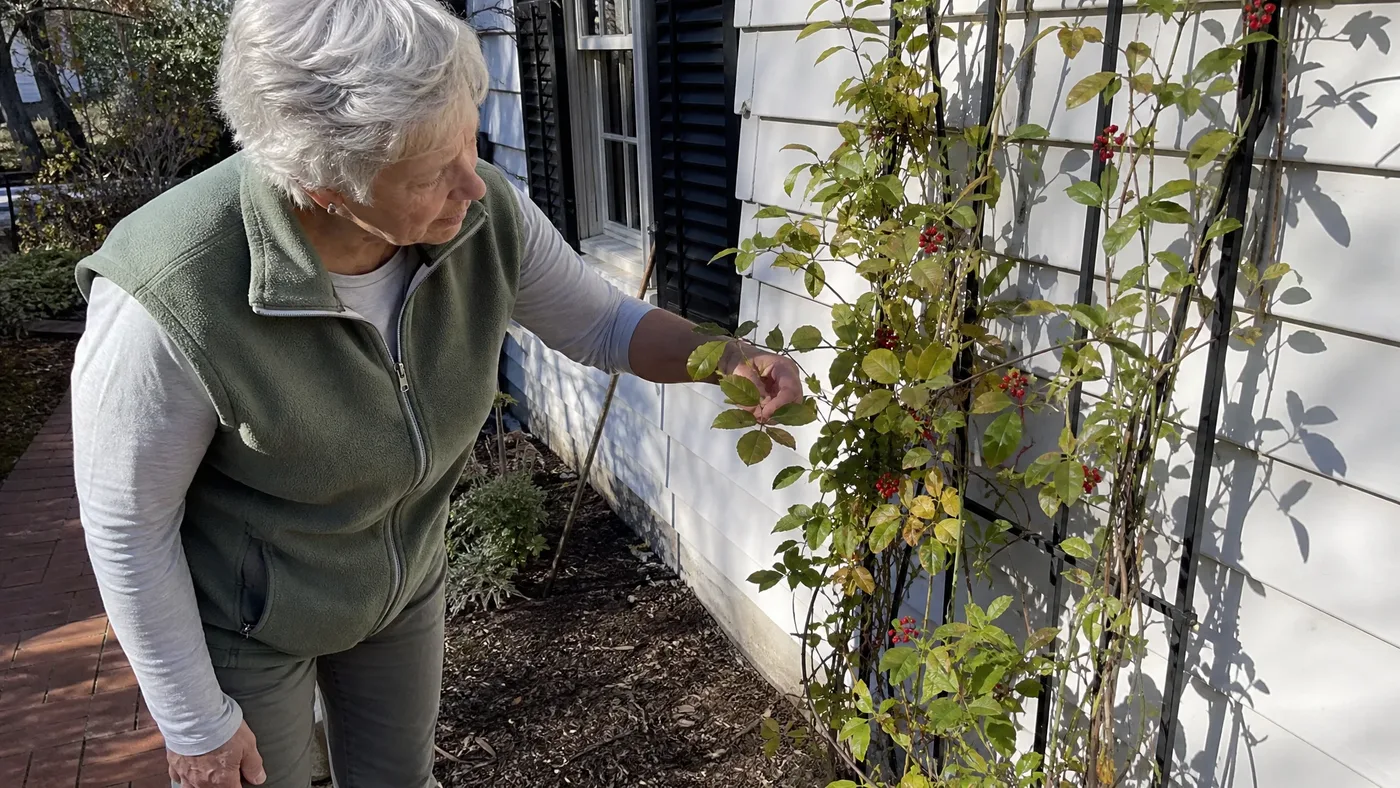
Why Scentsation Honeysuckle Leaves Turn Yellow or Brown
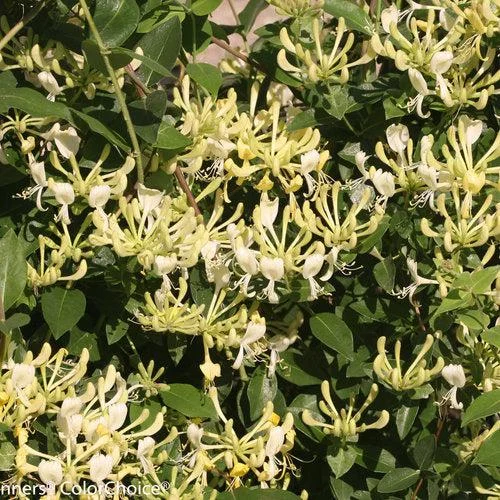
In June a healthy Scentsation Honeysuckle smells like warm honey at dusk, its creamy-white and yellow flowers crowding between oval green leaves. Then one morning you spot a single leaf that is the wrong color, and the whole vine suddenly looks suspect.
Take a breath. Leaf color is how this vine talks, and a wrong guess about watering or feeding can turn one pale leaf into a bare, sulking stem. Read on for the yellow, brown and spotted patterns, the cause behind each, how to recognize ordinary fall color, and what to do when leaves drop after a move.
Pale Yellow Leaves With Green Veins on Scentsation Honeysuckle
Start by noticing where the pale leaves sit on the vine. That one detail separates a hungry vine from one that cannot take up iron.
Pale Older Leaves Point to Nitrogen
Look at the oldest leaves near the base. If they fade evenly to pale green or yellow while the shoot tips stay deep green, suspect nitrogen. Nitrogen is a mobile nutrient that moves to newer growth when supplies run short, so the plant gives up its old leaves to feed the new ones.
Scentsation is a vigorous climber, and a vine pushing that much growth can drain a thin bed quickly. Feed in spring with a balanced fertilizer at the label rate and water it in. Our guide to what Scentsation actually needs at feeding time covers the details, and it is usually less than people expect.
Green Veins on New Growth Point to Iron
Now check the newest leaves. If the tissue is pale yellow but the veins stay sharply green, the usual culprit is iron the roots cannot absorb. Extra nitrogen will not cure it.
Scentsation grows in acid, neutral or alkaline soil, so do not assume your soil is fine or faulty. Run a soil test through your local extension service before you add anything. If the test points to iron, a chelated iron product used exactly as labeled is the usual fix. Our soil and pH guide explains how drainage and pH work together.
Confirm Before You Treat
Take ten minutes and walk the whole vine before you reach for a bottle. Note whether the pale leaves are old or new, whether they cluster on one side, and whether the soil at the base is dry, damp or wet. A pattern that follows the sun points to a different cause than one that follows the age of the leaf.
Wet, cold roots can also stall nutrient uptake, so a vine that looks hungry may simply be sitting in water. Fix the watering first if the soil is soggy, then judge again in a couple of weeks. New leaves will show you whether the diagnosis was right, because the old yellow ones will not recover.
Soggy Soil and Yellow Lower Leaves
Scentsation wants moist but well-drained soil, and the word people forget is drained. Wet roots cannot breathe, so the vine yellows its lowest leaves first and the color creeps upward.
The trouble is that overwatering, root rot, natural aging and nutrient shortage all yellow old leaves, and they look alike from across the yard. One of the most common questions we get is whether a yellow leaf in July means the vine is dying. Most often it means the soil has stayed wet.
Work through these steps before you change anything else:
- Push a finger into the soil near the base. If it is still soggy a day after watering, stop watering until the top layer dries.
- Pull mulch back from the stems so the crown can dry out.
- In a pot, tip the plant out and check that the drainage holes are open and the roots are not sitting in a soggy mass.
- In heavy clay, which Scentsation tolerates only when water can move through it, mix in coarse organic matter or plant on a slight mound next time.
- Water deeply but less often, and let the vine tell you when it is thirsty.
Our guide to watering Scentsation at every growth stage sets out a rhythm for each season. Yellow leaves already on the vine will not turn green again, so judge your fix by the new growth.
Pots Dry Out and Drown Faster
A vine in a container lives closer to the edge. A pot can bake dry in a week of summer heat, then sit waterlogged after a run of rain if the saucer stays full. Empty saucers after watering, and lift the pot now and then so you learn how heavy it feels when it is wet and when it is dry.
If the roots have filled the pot and water runs straight through without soaking in, the vine needs a larger home. Repot into fresh mix in a container with generous holes, and the lower leaves will usually stop yellowing within a few weeks.
Brown Crispy Edges on Scentsation Honeysuckle Foliage
Brown edges mean the leaf lost water faster than the roots could replace it. The edges of an oval leaf sit farthest from the veins, so they dry out first.
The species comes from the UK and Europe north to Scandinavia, and the cultivar grows in full sun or partial shade. The species is listed for full sun of 6 or more hours of direct light a day, but a sun-baked wall in midsummer still asks a lot of it. The table below separates the four usual causes.
| Cause | What you see | What to do |
|---|---|---|
| Heat | Edges and tips brown on the sunniest side after a hot spell | Soak deeply, mulch the root zone, add afternoon shade if you can |
| Wind | Ragged, dry browning on the exposed side only | Tie in loose shoots and add a screen or shelter |
| Drought | Crisp edges, drooping leaves and dry soil near the base | Water deeply, then keep a steady schedule |
| Fertilizer burn | Scorched edges soon after feeding | Flush with plenty of water and skip feeding until new growth appears |
Check the soil first. Brown edges with dry soil mean thirst, and brown edges with soggy soil mean the roots are struggling, which sends you back to the section above. Trim the worst leaves if they bother you, but the vine does not need it.
When Feeding Is the Cause
If the browning follows a feeding, you almost certainly gave too much. A vigorous climber still takes its fertilizer in modest doses, and granules that land against the stems or sit on wet leaves can scorch them. Sweep any stray granules away and water the bed slowly and thoroughly to wash salts down past the roots.
Give the Vine Time to Move On
Scorched tissue never turns green again, so do not keep fussing with the vine looking for a cure. Watch the new shoots instead. If they open clean and glossy, the cause is behind you. Because Scentsation keeps flowering from summer into autumn, a steady drink during dry spells also protects the buds that are still coming.
Black Spots and Powdery Patches on Scentsation Honeysuckle Leaves
Scentsation is prone to two fungal problems, leaf spot and powdery mildew. Both are common and both are usually manageable. Look closely at the leaf surface and the underside before you decide which you have.
Dark Spots, Yellowing and Curled Leaves
Fungal leaf spot shows as dark patches, often ringed with yellow. A related honeysuckle disease, leaf blight, leaves a silvery-white coating on the undersides of infected leaves. It begins as yellowing, turns tan brown and dry, and leaves often roll, twist and drop early.
Pick off affected leaves and bin them. In fall, rake up every fallen leaf, because old foliage carries the fungus over winter. Water at the base in the morning so the foliage dries fast.
White Dusty Coatings
Powdery mildew looks like flour dusted over the leaves. It is mostly cosmetic, though severely infected leaves may turn yellow and fall prematurely. A coating alone rarely calls for treatment.
Open up crowded stems so air moves through the vine, and keep roots from drying out. Our pests, diseases and problems guide covers both diseases in more depth, along with the aphids and thrips that also visit this vine.
Telling Disease From Pests
Sticky leaves, curled new tips and tiny insects clustered on the shoots point to aphids, not fungus. Check the undersides with a hand lens or even your phone camera. Fungus leaves spots and coatings, while insects leave sap, specks and distorted growth. Treat the one you actually find.
Fall Color That Is Perfectly Normal in Scentsation Honeysuckle
Scentsation is deciduous, so its oval leaves are meant to yellow and drop in autumn. The cultivar flowers from summer to autumn, which means you may see fragrant blooms and golden leaves on the same stem. That is a lovely sight, and it is no cause for worry.
Use these signs to tell ordinary autumn color from a problem:
- The yellowing spreads evenly across the whole vine, not in patches or on one side.
- Leaves show no spots, coatings, curling or silvery undersides.
- It happens as days shorten and nights cool, not in the middle of a hot summer.
- Leaves fall cleanly and the stems underneath stay firm and green.
If those signs match, leave the vine alone. Do not feed it, do not water extra and do not prune it back in a panic. Feeding late pushes soft growth that cold weather will damage.
The one job worth doing is raking up fallen leaves once they drop. Clearing them cuts down on disease carried into the next season.
Wait Until Winter to Prune
Resist the urge to tidy while the leaves are still turning. The vine is pulling resources back into its stems and roots, and early cutting wastes that. Our guide to when and how to prune Scentsation gives the timing that protects next season's flowers. Until then, enjoy the gold against the last blooms.
Sudden Leaf Drop After Planting or Moving
Roots that have been cut, boxed or shifted cannot supply water at the old rate, so the vine sheds leaves to balance the books. In our rows, the vines that sulk after a move are almost always the ones that went into the ground dry or too deep.
Steps for Recovery
Treat shock with patience and steady moisture. Follow these steps:
- Water the root zone well and keep the soil moist but never soggy.
- Mulch loosely, away from the stems.
- Shade the vine from the harshest afternoon sun while it recovers.
- Hold the fertilizer until you see new growth.
- Leave pruning shears in the shed. Scratch a stem lightly, and if green shows underneath, the vine is alive.
Bare stems often push new leaves from the buds once roots settle. Next time, set the crown at the right depth from the start with our guide to planting Scentsation for fast, fragrant growth.
How Long to Wait
Patience is the hard part. A shocked vine can look dead for weeks, and the temptation is to dig it up or drown it. Do neither. Keep the soil evenly moist and give it a full season before you decide. If the stems stay green when scratched, the roots are still working and the leaves will come.
Plant and move vines when the weather is mild rather than in a heat wave, and soak the root ball before it goes in the ground. Those two habits prevent most of the leaf drop we hear about.
Reading Your Scentsation Honeysuckle Leaves Like a Diary
Every leaf records what the vine has been through. Pale with green veins points to iron or nitrogen, yellow at the base with wet soil points to water, and brown edges point to heat, wind, thirst or too much fertilizer. Spots and dust mean disease, even yellow in fall means nothing at all, and a bare stem after a move means shock.
Check the soil, look at where the color sits, and fix one thing at a time. Then come back to the vine one evening when the light goes low and the scent rises, and let the new leaves tell you whether it worked.
Scentsation Honeysuckle
Nursery-grown Scentsation Honeysuckle in sizes from 2 GALLON, shipped to your door.
From $94.30
Shop Now →Our plants spend their days on our farms, where Scentsation settles into moist, well-drained soil and gets sun through much of the day with some shade to ease the heat. Because we grow and sell top-quality plants from our own farms, we have seen how healthy leaves should look. If yours have been telling a different story, starting fresh with one of ours is an easy way to see the difference.